
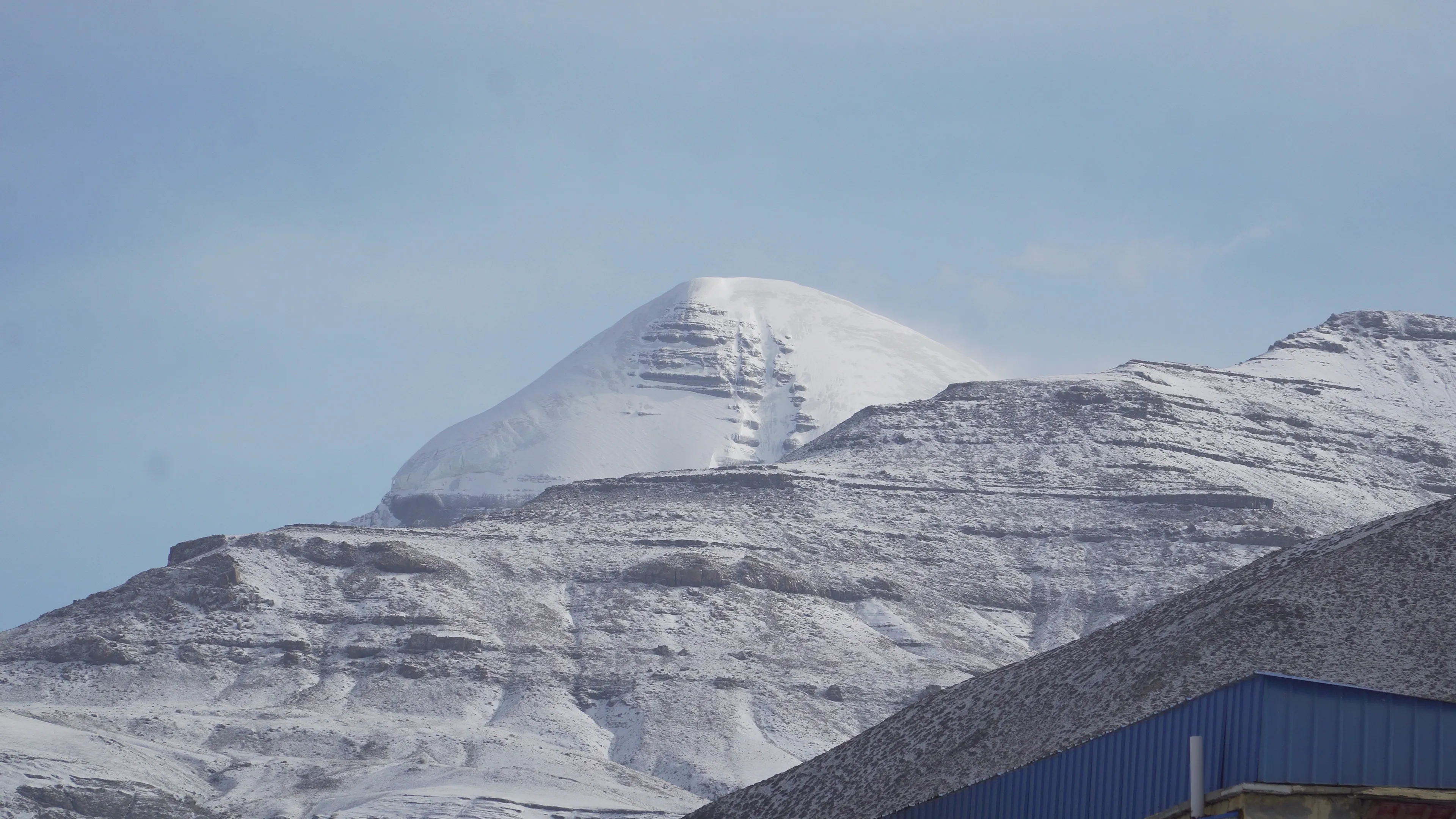
Of all the concerns that pilgrims bring to us when they start planning the Kailash Mansarovar Yatra, altitude sickness is the one that comes up most often. And it deserves to come up most often. The altitudes involved in this journey are genuinely significant. Lake Mansarovar sits at 4,590 metres. Darchen, where the Parikrama begins, sits at 4,560 metres. Dolma La Pass, the highest point of the Kora, sits at 5,630 metres. These are not numbers to be minimised for the sake of reassurance.
At the same time, altitude sickness is one of the most manageable risks in adventure travel when it is properly understood and prepared for. Thousands of pilgrims of all ages, fitness levels, and health backgrounds complete the Kailash Yatra safely every season. The ones who have trouble are almost always the ones who did not prepare, who ignored early symptoms, or who pushed through warning signs out of determination or pride. This guide is designed to make sure that is not you.
We will cover exactly what happens to your body at altitude, how to recognise every stage of altitude-related illness from mild to life-threatening, what you can do before you leave home to reduce your risk, what acclimatisation actually means in practice on this route, what medication to consider, and what to pack so that you are genuinely ready. Read it carefully. Share it with anyone travelling with you. And if you have any medical questions specific to your health history, discuss this guide with your doctor before you book.
Why Altitude Affects Everyone: The Basic Physiology
Altitude sickness is not a sign of weakness or poor fitness. It is a physiological response that can affect anyone, regardless of age, physical condition, or prior trekking experience. Understanding why this happens makes everything that follows easier to apply.
At sea level, the air around you contains approximately 21 percent oxygen. That percentage does not change as you go higher. What changes is the atmospheric pressure, which decreases as altitude increases. Lower pressure means that each breath you take delivers fewer oxygen molecules to your lungs, even though the proportion of oxygen in the air is the same. At 4,500 metres, atmospheric pressure is roughly half what it is at sea level, meaning each breath delivers approximately half the oxygen of a breath taken at the ocean's edge. At Dolma La Pass at 5,630 metres, you are working with even less.
Your body has a range of responses to this oxygen reduction. It begins to breathe more deeply and more frequently. Your heart beats faster to circulate the available oxygen more efficiently. Over several days, your kidneys change the pH of your blood to support faster breathing, and your bone marrow begins producing more red blood cells to carry more oxygen per unit of blood. These adaptations are collectively called acclimatisation, and they take time. The problem arises when you ascend faster than your body can adapt.
Acute Mountain Sickness (AMS) is the umbrella term for the range of symptoms that occur when your body is struggling with this adaptation. In mild cases it is uncomfortable but manageable. In severe cases it becomes a medical emergency that requires immediate descent. The good news is that the progression from mild to severe is almost always gradual, and almost always gives you warning signs before it becomes dangerous, as long as you are paying attention.
The Altitudes You Will Reach on the Kailash Yatra
Before covering symptoms and prevention, it is worth grounding yourself in the specific altitude profile of the Kailash Yatra so you understand exactly what your body will be asked to manage.
The most critical altitude transition to understand is the jump between wherever you spend your final night before beginning the Kora and Dirapuk at 5,010 metres on Day 1. If you have spent the previous night at Mansarovar at 4,590 metres and have had a rest day there, your body has some preparation. If you have rushed from a lower altitude directly to Darchen and begun the Kora the next morning, you are placing considerable strain on your acclimatisation.
Dolma La Pass at 5,630 metres on Day 2 of the Kora is the single most challenging altitude point on the entire journey. At this elevation, oxygen availability is approximately 51 percent of what it is at sea level. Your body is working significantly harder than normal for every single step. This is entirely manageable with proper preparation. It becomes dangerous only when combined with prior AMS symptoms that have been ignored, inadequate hydration, or a pace that the body simply cannot sustain.
Recognising Altitude Sickness: Symptoms from Mild to Severe
The most important skill you can develop for the Kailash Yatra is the ability to recognise altitude sickness in yourself and in the people around you, and to distinguish between the mild symptoms that require attention and rest versus the severe symptoms that require immediate action. Here is a clear breakdown of every stage.
Mild AMS: the warning stage
Mild AMS typically appears within the first six to twelve hours of arriving at a new altitude, particularly above 3,000 metres. The symptoms are uncomfortable but not dangerous in themselves. They are your body's signal that it is struggling to adapt and needs more time before you go higher.
- Headache, usually dull and throbbing, often worse in the morning or when lying down
- Fatigue and weakness that seems disproportionate to the physical effort you are making
- Loss of appetite, sometimes accompanied by mild nausea
- Dizziness or a feeling of light-headedness, particularly when standing up quickly
- Difficulty sleeping or disturbed sleep with frequent waking
- A mild sense of breathlessness during activity
If you experience any combination of these symptoms, the correct response is to stop ascending, rest, drink plenty of water, and wait. Do not go higher until every symptom has completely resolved. If symptoms worsen over the course of a day rather than improving, you may need to descend slightly. Never push upward through mild AMS symptoms, no matter how determined you feel.
Moderate AMS: the serious warning
Moderate AMS represents a significant escalation. If mild symptoms have not resolved with rest, or if they worsen, you may be moving into moderate territory. These symptoms require close monitoring and in some cases immediate action.
- Severe and persistent headache that does not respond to ibuprofen or paracetamol
- Vomiting rather than just nausea
- Significant weakness and difficulty performing simple physical tasks
- Marked breathlessness even at rest, not just during movement
- Coordination problems: stumbling, difficulty with balance, or difficulty walking in a straight line
- Unusual drowsiness or difficulty staying awake
- Confusion or irrational behaviour
At this stage, the affected person must descend as soon as possible. Even a descent of 300 to 500 metres can produce a significant improvement in symptoms. Supplemental oxygen should be administered if available. Descent takes priority over any other consideration including completing the Parikrama, maintaining the group's schedule, or reaching a specific destination.
Severe AMS: High-Altitude Pulmonary Oedema (HAPE) and High-Altitude Cerebral Oedema (HACE)
HAPE and HACE are the life-threatening forms of altitude illness. They are medical emergencies that require immediate response. It is important that every member of your group knows how to recognise them.
High-Altitude Pulmonary Oedema (HAPE) occurs when fluid accumulates in the lungs. Symptoms include extreme breathlessness at rest or with minimal activity, a persistent cough that may produce pink or frothy mucus, a feeling of tightness or gurgling in the chest, blue or grey discolouration of the lips or fingernails, and extreme fatigue that prevents normal movement. HAPE can develop rapidly and can be fatal within hours if not treated. It is the most common cause of death from altitude illness.
High-Altitude Cerebral Oedema (HACE) occurs when fluid accumulates in the brain. Symptoms include severe headache that does not respond to any medication, severe loss of coordination and balance (the person cannot walk in a straight line), confusion, disorientation, and altered consciousness. In advanced cases, HACE causes unconsciousness and can be fatal.
Who Is Most at Risk of Altitude Sickness on the Kailash Yatra?
Altitude sickness does not discriminate cleanly by age or fitness. A young, fit marathon runner can develop severe AMS while a sixty-five-year-old with no prior trekking experience adapts perfectly well. That said, certain factors do influence risk and are worth understanding before you book.
Acclimatisation: The Most Important Thing You Can Do
Of all the things you can do to reduce your risk of altitude sickness on the Kailash Yatra, acclimatisation is the most important by a significant margin. No medication replaces it. No level of fitness substitutes for it. Acclimatisation is simply giving your body the time it needs to adapt to reduced oxygen availability before you ask it to go higher.
The fundamental principle of acclimatisation is captured in the phrase that high-altitude guides use worldwide: climb high, sleep low. This means you can make excursions to higher altitudes during the day but you should sleep at a lower altitude until your body has adapted. It also means that you should not increase your sleeping altitude by more than 300 to 500 metres per night once you are above 3,000 metres.
Why the Lhasa route offers the best acclimatisation
The single most effective thing you can do for acclimatisation on the Kailash Yatra is to choose the Lhasa cultural route. Flying from Kathmandu at 1,400 metres to Lhasa at 3,650 metres and spending two to three days there before continuing westward gives your body a staged ascent that no other route can match. You gain altitude gradually over multiple days before reaching Mansarovar and Darchen. Your cardiovascular system, your kidneys, and your blood composition all have time to begin the adaptation process before you face the most demanding altitudes.
On the overland Kerung route, the ascent from the border at 1,750 metres to the plateau at 4,500 metres happens in approximately one to two days of driving. This is faster than ideal and means that pilgrims on this route should treat the driving days as acclimatisation days rather than simply transit. Build in a rest day at Saga or another intermediate point if possible.
On the helicopter route, the ascent is the most rapid of all: from Kathmandu at near sea level to Taklakot at 3,650 metres in a single day of flying. Helicopter route travellers must be especially attentive to their bodies in the first 48 hours in Tibet and should not attempt any unnecessary exertion during this period.
The rest day at Lake Mansarovar: do not skip it
Regardless of which route you use to arrive at Lake Mansarovar, spending at least one full rest day at the lake before proceeding to Darchen and beginning the Kora is the single acclimatisation step that most directly affects your performance on the Parikrama. Mansarovar at 4,590 metres is at a very similar altitude to Darchen at 4,560 metres where the Kora begins. A full rest day at the lake lets your body stabilise at this altitude before you ask it to ascend to 5,010 metres (Dirapuk on Day 1) and then 5,630 metres (Dolma La on Day 2).
Pilgrims who rush from their vehicle directly to Darchen and begin the Kora the next morning are consistently the ones our guides report having the most difficulty on Day 2. The rest day at Mansarovar is not wasted time. It is the preparation that makes the Parikrama possible.
Signs that you have not fully acclimatised
Before you begin the Kora from Darchen, ask yourself honestly whether any of the following apply: you have a persistent headache that started after arriving at altitude, you have not slept well for two or more nights, you feel noticeably short of breath while walking on flat ground, you have been nauseous or have lost your appetite. If any of these are true, you need at least one more rest day before starting the Kora. Starting with unresolved AMS symptoms is the most reliable way to guarantee that those symptoms will worsen on the trail.
Medications for Altitude Sickness: What Works and What Does Not
Several medications are relevant to the Kailash Yatra and altitude illness. Here is a clear explanation of each one, including what it does, who it is appropriate for, and what its limitations are. None of these medications should be taken without consulting your doctor first, particularly if you are on other medications or have any existing health conditions.
Acetazolamide (Diamox): the most widely used prevention medication
Acetazolamide, sold under the brand name Diamox, is a carbonic anhydrase inhibitor that works by stimulating faster and deeper breathing, which accelerates your body's acclimatisation process. It is the most widely studied and most widely used medication for AMS prevention and is recommended by the Wilderness Medical Society for people who are ascending rapidly to altitudes above 2,750 metres.
The standard dosage for AMS prevention is 125 to 250 mg twice daily, begun 24 to 48 hours before your first significant altitude gain and continued for 48 hours after reaching your highest planned altitude. Your doctor will confirm the correct dose for your specific situation.
Common side effects include increased urination (Diamox is a mild diuretic, so stay well hydrated), tingling or numbness in the hands, feet, or face, and an unusual taste when drinking carbonated drinks. These side effects are manageable and not dangerous. However, Diamox is a sulfonamide drug and is absolutely contraindicated for anyone with a sulfa drug allergy. Always disclose all allergies to your doctor when discussing this medication.
Diamox does not eliminate the risk of AMS and it does not replace the need for acclimatisation. It helps your body adapt faster, but it does not substitute for the fundamental principle of not ascending too quickly. Think of it as a tool that supports acclimatisation rather than a replacement for it.
Dexamethasone: emergency use only
Dexamethasone is a corticosteroid that reduces brain swelling and is used for the emergency treatment of HACE and as a short-term symptomatic treatment for severe AMS when descent is not immediately possible. It can produce dramatic improvement in symptoms very quickly. However, dexamethasone does not treat the underlying cause of altitude illness and symptoms typically return when the medication is stopped. It is not appropriate for routine AMS prevention and should be reserved for emergency situations under medical guidance.
Some guides and operators carry dexamethasone as part of their emergency kit. If your guide administers it, it means the situation is serious and descent must follow as quickly as possible.
Nifedipine: for HAPE treatment
Nifedipine is a calcium channel blocker used specifically for the treatment of High-Altitude Pulmonary Oedema. It reduces pulmonary arterial pressure and can help manage HAPE symptoms while descent is being arranged. It is not a prevention medication and is not appropriate for routine use. Your operator and guide will carry nifedipine as part of their emergency medical kit.
Ibuprofen and paracetamol: for headache management
Standard over-the-counter pain relievers are appropriate for managing the headache associated with mild AMS. Ibuprofen 400 mg is often slightly more effective than paracetamol for altitude headache. These medications treat the symptom rather than the underlying cause, which means it is still essential to rest and not ascend further while you have a headache, even if the medication makes you feel better. Masking symptoms with pain relief and continuing to push upward is one of the more dangerous things you can do at altitude.
Hydration at Altitude: How Much, What, and What to Avoid
Dehydration is one of the most consistent contributors to AMS, and it is also one of the most preventable. At high altitude, you lose water through breathing much faster than you do at sea level because you are breathing more rapidly and the air is extremely dry. Many pilgrims simply do not feel as thirsty as they should and do not realise how dehydrated they are becoming until symptoms appear.
The target fluid intake at altitudes above 3,500 metres is three to four litres of water per day. This is significantly more than most people drink at sea level. Spreading this across the day rather than drinking large amounts at once is more effective for hydration. A simple guideline: if your urine is pale yellow or clear, you are adequately hydrated. If it is dark yellow, you need to drink more immediately.
What to drink
Plain water is your most important fluid at altitude. Oral rehydration salts (ORS) dissolved in water help your body retain fluid more effectively than plain water alone and are particularly useful if you have been vomiting or have significant diarrhoea. Warm herbal teas and soups contribute to your fluid intake and provide warmth, which matters considerably at Mansarovar and on the Kora route.
Ginger tea is worth mentioning specifically. It is available at guesthouses along the route and has genuine evidence for reducing nausea. Many pilgrims find it soothing and effective for the digestive discomfort that can accompany early AMS. Yak butter tea, the traditional Tibetan drink offered at most guesthouses and monasteries, is an acquired taste but provides both hydration and significant calories. Drinking it is respectful of local hospitality and genuinely sustaining at altitude.
What to avoid
Alcohol must be avoided entirely for the first 72 hours at altitude and minimised throughout the journey. Alcohol suppresses breathing during sleep, which reduces the oxygen your body takes in overnight at exactly the time when acclimatisation is most actively occurring. It also dehydrates you, worsening the already significant fluid demands of high altitude. Even small amounts of alcohol at 4,500 metres have a much greater effect than the same amount at sea level.
Caffeine in moderate amounts is generally acceptable and coffee or tea in the mornings does not need to be eliminated. However, excessive caffeine can increase heart rate and restlessness, which is counterproductive when you are trying to rest and acclimatise. Carbonated drinks are also worth noting: they can cause bloating and discomfort at altitude, and if you are taking Diamox, they taste noticeably unpleasant.
Practical Strategies for Managing Altitude on the Kora
Beyond medication and acclimatisation, there are daily habits and practical decisions that make a significant difference to how you manage altitude on the Parikrama itself.
Walk slowly and breathe deliberately
The most common mistake that fit, experienced walkers make on the Kailash Kora is setting a pace that is appropriate for sea-level walking. At 5,000 metres, a pace that would feel moderate at lower altitude can deplete your oxygen reserves faster than your body can replenish them. The general guidance is to walk at a pace at which you can maintain a conversation without pausing. If you cannot speak in complete sentences without stopping to breathe, you are walking too fast.
On the ascent to Dolma La on Day 2, many pilgrims find it helpful to use a conscious breathing pattern: take two or three deliberate breaths for every step. This sounds inefficient but it is actually more effective at altitude than natural breathing because natural breathing becomes shallower under exertion. Deliberate, deep breaths maximise the oxygen extracted from each breath cycle.
Start Day 2 very early
The single most practical piece of advice for Day 2 of the Kora is to leave Dirapuk no later than 6 am, and ideally between 5 and 5:30 am. The ascent to Dolma La takes most pilgrims three to five hours depending on pace and acclimatisation. Starting early means you cross the pass in the morning when temperatures are at their coldest but before any afternoon weather deterioration. It also means you have the entire afternoon for the long descent to Zutulpuk rather than arriving at the pass in the early afternoon and descending in fading light.
Your guide will advise on the specific departure time for your group based on conditions. Follow this advice even if it means a very early start. On Day 2, timing is safety.
Stop when you need to stop
There is no schedule on the Kailash Kora more important than your body's signals. If you feel dizzy, sit down immediately before attempting to rest. If your headache worsens significantly during the ascent to Dolma La, tell your guide and rest before continuing. If you feel nauseous, stop, breathe, and drink water. The pass will still be there when you are ready to continue.
The one section where stopping mid-route is genuinely difficult is the ascent and descent of Dolma La itself. Once you begin the ascent, completing the crossing is the most sensible option in most circumstances because turning back involves descending steep terrain in the wrong direction. This is another reason to begin Day 2 in good health and with resolved AMS symptoms. Starting the crossing with pre-existing symptoms is a much more difficult situation to manage than developing mild symptoms during the ascent and needing to pace yourself.
Communicate with your guide daily
Your guide is trained to assess altitude illness, administer supplemental oxygen, make descent decisions, and coordinate emergency evacuation if needed. They can only help you if you tell them how you are feeling. Many pilgrims are reluctant to report symptoms because they do not want to hold the group back or be seen as struggling. This reluctance, more than any other single factor, is what allows mild AMS to progress to serious illness.
Make it a habit to give your guide an honest daily health report every morning: how you slept, whether you have a headache, your appetite, any dizziness. A good guide will ask you anyway, but proactively communicating makes the process more reliable for everyone.
Pre-Trip Medical Preparation: What to Do Before You Leave Home
Everything we have covered so far applies to what happens on the journey. But the preparation that matters most for altitude happens before you leave. Here is a pre-trip medical checklist designed specifically for the Kailash Yatra.
What to Pack: Complete Medical and Altitude Kit for the Kailash Yatra
This is the packing list that matters most for your health and safety. Everything below should be in your personal bag, not in your main luggage stored in Darchen, and not in your guide's bag. If you need it, you need it immediately.
What Your Kailash Trip Planner Guide Carries for You
Your personal medical kit is what you carry for yourself. Your guide carries emergency resources for the group. Knowing what is available through your guide helps you understand the complete safety framework around your journey.
Every Kailash Trip Planner guide on the route carries portable supplemental oxygen cylinders, sufficient for initial emergency treatment of HAPE or HACE while descent is being arranged. They carry dexamethasone injection for emergency HACE treatment and nifedipine for HAPE. They carry a comprehensive group first aid kit including wound care, splints, bandages, and thermal blankets.
Guides are trained in altitude sickness recognition, initial treatment, and the decision-making process for when to initiate emergency evacuation. The nearest helicopter landing point and the evacuation protocol for your specific route are part of every guide's pre-departure briefing.
The private vehicles on all VIP and premium packages carry a dedicated oxygen cylinder in the vehicle itself at all times during the Tibet driving sections, not just at the guesthouses. This detail matters enormously in the scenario where someone develops serious symptoms on a long plateau drive rather than at an accommodation point.
None of this reduces the importance of your personal medical preparation or your own judgement on the trail. What it does is mean that you are not alone in managing your health on this journey. The system around you is designed to catch what you might miss.
Frequently Asked Questions About Altitude Sickness on the Kailash Yatra
Does fitness prevent altitude sickness?
No, and this is one of the most important misconceptions to correct. Physical fitness helps you perform at altitude and makes the physical demands of the Parikrama more manageable, but it does not protect against AMS. Altitude acclimatisation is a physiological process driven by time at altitude, not cardiovascular fitness. Very fit people who push hard at altitude can develop AMS faster than unfit people who pace themselves. The best predictor of altitude tolerance is prior experience at similar altitudes, not gym fitness.
Can I take Diamox if I have never used it before?
Yes, but you should test it before your departure. Take a dose of Diamox at home, several weeks before your trip, to confirm you do not have a sulfa allergy (which would make it contraindicated) and to understand how the side effects feel. The tingling in the hands and feet and increased urination are normal and manageable, but experiencing them for the first time at 5,000 metres while already stressed is not ideal. Discuss the correct dosage and timing with your doctor.
What should I do if I develop a headache at Mansarovar before the Kora?
Rest, drink plenty of water, take ibuprofen or paracetamol, and do not begin the Parikrama until the headache has completely resolved. A headache at Mansarovar is a mild AMS symptom and a clear signal that your body needs more time to acclimatise. Take at least one additional rest day. Starting the Kora with an unresolved altitude headache is one of the most reliable ways to develop serious problems on Day 2.
Is altitude sickness more likely in certain months on the Kailash Yatra?
The risk of altitude sickness itself does not change significantly by month since the altitudes are the same year-round. However, the cold of early May and late October compounds AMS symptoms and makes mild illness feel more severe. In these shoulder months, hypothermia and AMS can be confused, and both worsen each other. June and September, with their more moderate temperatures, are the most forgiving months from a health management perspective.
What happens if I cannot complete the Kora because of altitude sickness?
Your guide will help you descend to a safe altitude and arrange for you to rest and recover. If you develop serious symptoms that require descent, the priority is getting you lower and ensuring your health. On the Outer Kora specifically, the only point before Dolma La where descent is straightforward is Dirapuk. Once you begin the ascent to Dolma La on Day 2, completing the crossing and descending to Zutulpuk is usually more sensible than attempting to turn back. Your guide will make this assessment with you. For pilgrims who are genuinely unable to complete the Kora due to health constraints, horse and yak support is available to assist on the sections of the route that horses can access, and descent routes do exist if emergency evacuation is needed.
Do I need a different approach to altitude if I am over 60?
Not fundamentally different, but there are emphases worth knowing. Age is not a reliable predictor of AMS risk, but older travellers with cardiovascular or respiratory conditions face higher complication risk if AMS develops. The Lhasa route is more strongly recommended for older pilgrims because of its superior acclimatisation profile. A thorough pre-trip cardiovascular assessment is essential. Horse support for the Kora should be pre-arranged rather than left as a last-minute option. And the guide's daily health assessment should include specific cardiovascular indicators for older group members.
Prepare Well and the Mountain Will Take Care of the Rest
Altitude sickness is the most common reason that pilgrims do not complete the Kailash Parikrama. It is also, in the large majority of cases, preventable with the right preparation. Acclimatise properly. Choose the route that best fits your health profile. Carry your medications. Drink your water. Walk at the pace that your body sets, not the pace that your determination wants to set. Tell your guide how you feel every morning.
Kailash Trip Planner has guided pilgrims safely through this journey for many years. Our guides are altitude-trained, our vehicles carry emergency oxygen, our itineraries build in the acclimatisation time that most short-trip packages skip. If you have specific health concerns about the Kailash Yatra, we are happy to discuss them before you book. No question is too basic and no concern is too small.
Talk to us: kailashtripplanner.com