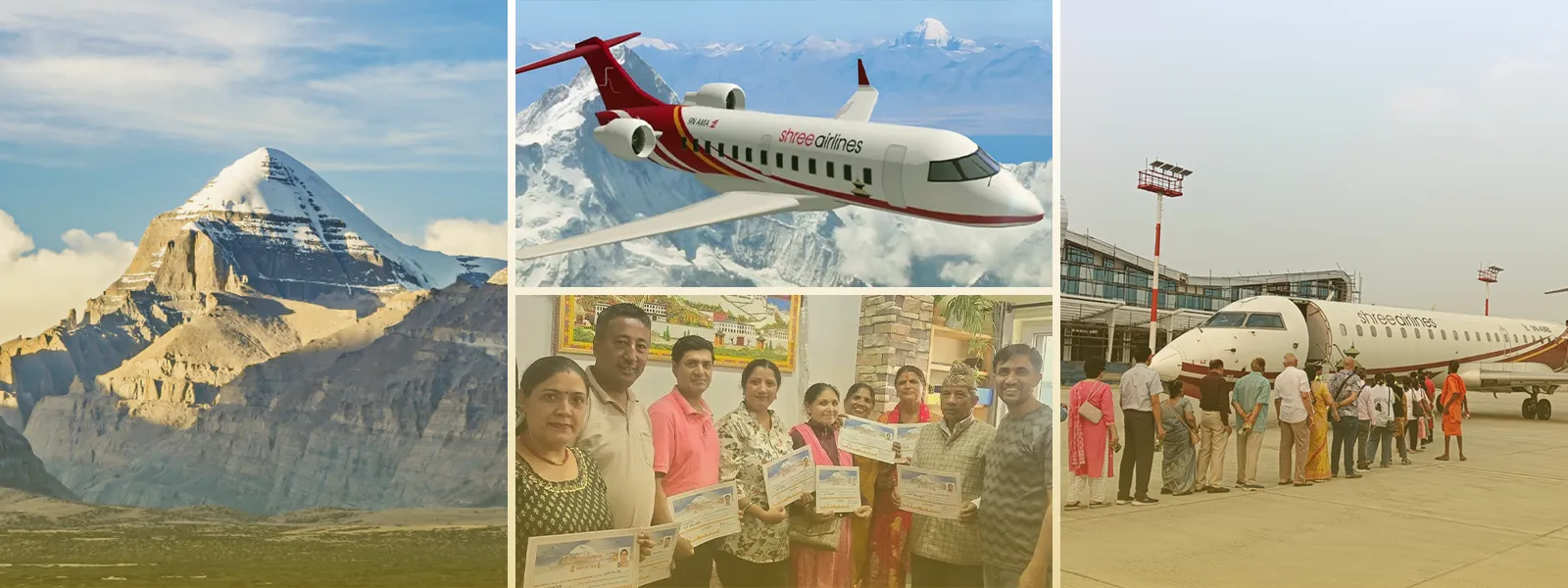
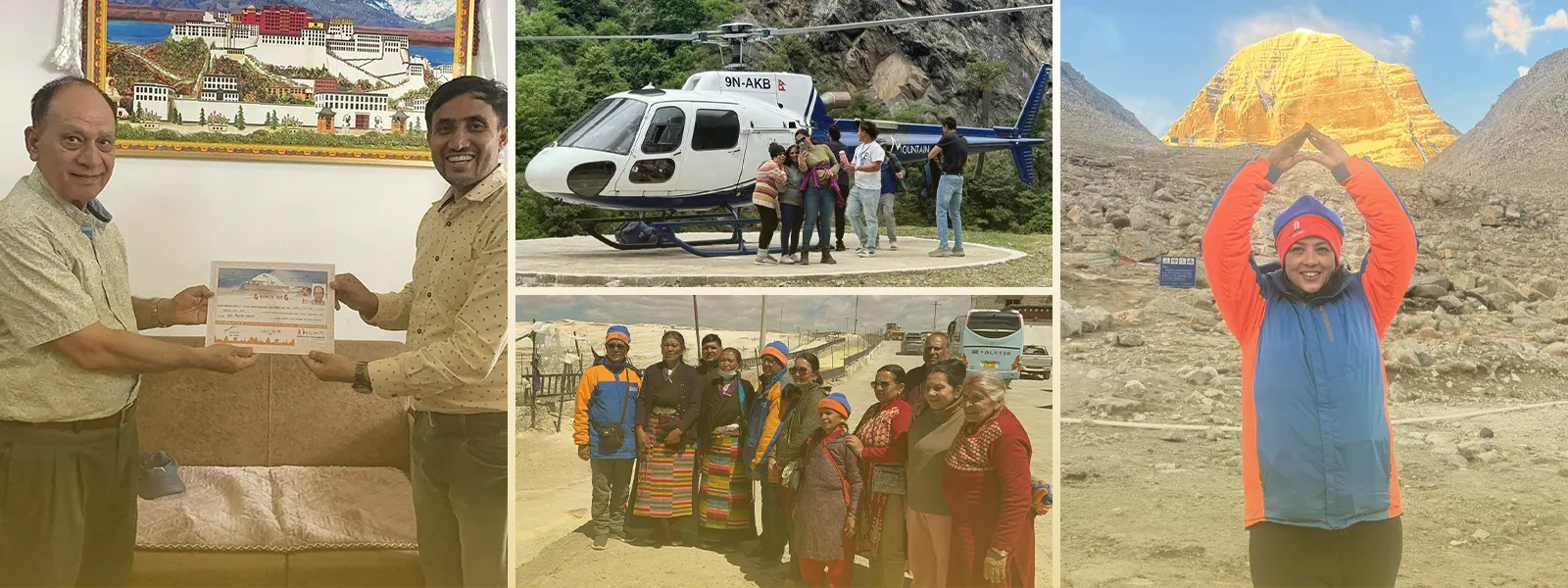
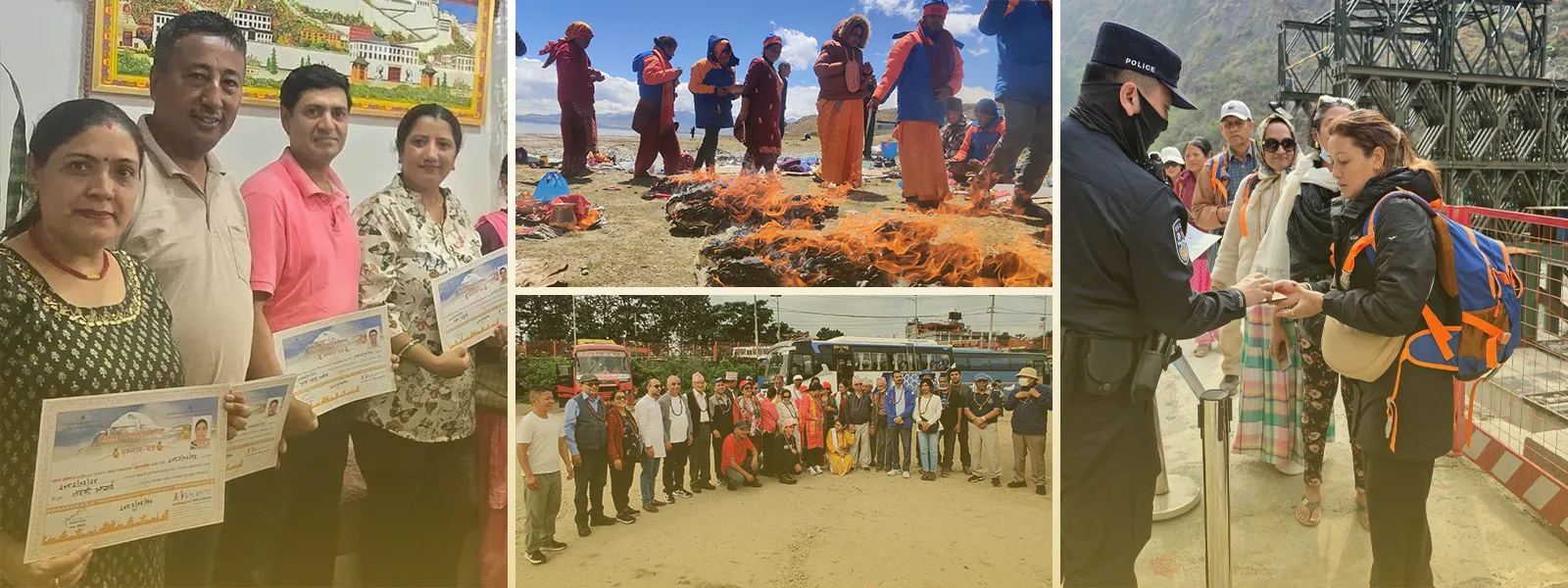
Kailash Yatra by helicopter from Kathmandu
Join a remarkable spiritual adventure on the Kailash Mansarovar Yatra via Simikot–Hilsa, where sacred landscapes, deep devotion, and the holy journey around Mount Kailash await.
The Kailash Mansarovar Yatra via Simikot–Hilsa is a sacred pilgrimage that combines spiritual devotion, remote Himalayan adventure, and the divine presence of Mount Kailash and Lake Mansarovar. Beginning in Kathmandu, the journey includes visits to holy sites such as Pashupatinath Temple before continuing through Nepalgunj, Simikot, and Hilsa into the sacred land of Tibet. This unique route offers pilgrims a memorable blend of faith, culture, and dramatic mountain scenery.
A major highlight of the pilgrimage is the holy visit to Lake Mansarovar, where devotees perform rituals, offer prayers, and experience deep peace in the presence of this sacred lake. The journey then continues to Darchen and onward to the Kailash Kora, beginning from Yam Dwar and passing through Dirapuk, Dolma La Pass, Gauri Kund, and Zuthulpuk. With scenic flights, helicopter transfers, sacred rituals, and the unforgettable parikrama around Mount Kailash, this pilgrimage offers a truly life-changing spiritual experience.
11 Days / 10 Nights
5630 m
3-Star Hotel & Guesthouse
Included
The Kailash Yatra by Helicopter from Kathmandu is a sacred and convenient pilgrimage for devotees seeking the blessings of Mount Kailash and Lake Manasarovar with a shorter and more comfortable travel format. This 11-day journey combines spiritual depth, scenic Himalayan travel, and the unique experience of helicopter access through Nepal’s remote mountain region.
This tour is designed for pilgrims who wish to reduce long overland travel while still completing the holy Kailash Kora. With spiritual visits in Kathmandu, flights through Nepal, helicopter transfer to the border region, sacred rituals at Manasarovar, and the life-changing parikrama of Mount Kailash, the journey offers a meaningful and well-organized experience.
The journey begins in Kathmandu, where pilgrims arrive, rest, and prepare for the sacred yatra ahead. After a spiritual visit to Pashupatinath Temple and nearby holy sites, the route continues by flight to Nepalgunj, where final briefing and preparation take place before entering the remote Himalayan sector.
From Nepalgunj, pilgrims fly to Simikot and continue by helicopter to Hilsa, one of the key gateways to the Kailash region. After crossing the border and completing formalities, the journey continues by road to Taklakot, where pilgrims rest and acclimatize before moving deeper into the sacred region.
From Taklakot, the route continues to Lake Manasarovar, passing important places such as Rakshas Tal and Chiu Gompa. After rituals and spiritual activities at the lake, pilgrims continue to Darchen, which serves as the base camp for the sacred Kailash Kora.
The parikrama then begins from Yam Dwar and continues through Dirapuk, Dolma La Pass, Gauri Kund, and Zuthulpuk before returning to Taklakot. The return journey follows back through Hilsa, Simikot, Nepalgunj, and finally to Kathmandu, completing a spiritually rich and efficient pilgrimage.
Note for International Travelers: If you want to bypass Kathmandu entirely to save time, you can start closer to the border. Travelling from India? See our Lucknow departure helicopter tour for a more direct route.
Kathmandu is an important beginning point for this sacred helicopter yatra. Before entering the remote Kailash region, pilgrims are given time to rest, settle in, and begin the journey with a peaceful and spiritually prepared mindset.
A special part of the journey is the visit to Pashupatinath Temple, one of the most revered temples of Lord Shiva. Starting the yatra with darshan and prayer at Pashupatinath adds deep spiritual significance and helps pilgrims begin the pilgrimage with blessings and devotion.
The time spent in Kathmandu also supports practical preparation before the mountain journey begins. With rest, coordination, and briefing before departure to Nepalgunj, pilgrims can move forward with greater clarity, confidence, and peace of mind. Make sure you understand the mandatory Tibet permit and visa process for this tour before your departure date.
The arrival at Lake Manasarovar is one of the most sacred and emotionally uplifting moments of the pilgrimage. Revered in Hinduism, Buddhism, Jainism, and the Bon religion, the lake is considered one of the holiest places in the world and is deeply connected with spiritual purity and divine blessing.
Pilgrims may perform Puja, prayers, and other personal rituals at the sacred lakeshore. Surrounded by the serene waters, the vast sky, and the holy atmosphere of the Kailash region, this becomes one of the most peaceful and meaningful parts of the yatra.
Mount Kailash is regarded as one of the most sacred mountains on earth and is believed in Hindu tradition to be the abode of Lord Shiva and Goddess Parvati. In other faiths as well, the mountain is worshipped as a divine center of spiritual energy and immense religious importance.
Unlike other mountains, Mount Kailash is not climbed but honored through the sacred Parikrama or Kora. Pilgrims believe that completing this holy circuit brings purification of the soul, release from past karma, and a deep sense of spiritual peace and fulfillment.
The Kailash Parikrama is the spiritual heart of the journey and the most sacred part of the yatra. It begins from Yam Dwar, the traditional starting point of the holy circuit, where pilgrims begin the trek with faith, devotion, and deep anticipation.
The first stage of the trek leads to Dirapuk, where pilgrims enjoy clear and powerful views of the north face of Mount Kailash. This section of the journey is peaceful, deeply moving, and filled with the sacred presence of the holy mountain.
The next day is the most challenging part of the Kora, as pilgrims cross the high Dolma La Pass, the highest point of the entire pilgrimage. Along the way, they also witness Gauri Kund and other sacred sites that make this day both physically demanding and spiritually powerful.
The final stretch of the Kora leads toward Zuthulpuk and then back onward toward Taklakot, marking the completion of the holy circuit. For many pilgrims, this becomes a life-changing moment of gratitude, devotion, and inner transformation. Completing this sacred circuit is a profound milestone that resonates long after the journey ends. To see more ways to experience this sacred region by air, you can browse all helicopter tour options.
Since the yatra reaches high-altitude locations such as Taklakot, Lake Manasarovar, Darchen, and the Kailash Kora route, proper acclimatization is very important. The stay in Taklakot is especially valuable, as it allows the body time to adjust before moving further into the higher pilgrimage zone.
Even though this itinerary uses flights and helicopter access to reduce travel time, the altitude remains a major factor throughout the journey. Pilgrims are advised to rest properly, stay hydrated, eat light meals, and avoid unnecessary physical strain during the early days of the pilgrimage.
The trekking days around Mount Kailash, especially while crossing Dolma La Pass, require extra care and patience. Slow walking, steady pacing, and listening carefully to the body are very important for a safe and comfortable experience in the high Himalayan region.
Pilgrims should also remain alert to symptoms such as headache, dizziness, breathlessness, or nausea. Proper rest, calm movement, and timely support from the team can make a big difference in ensuring a smoother and safer pilgrimage.
The best time to undertake the Kailash Yatra by Helicopter from Kathmandu is generally during May, June, September, and October. These months usually offer clearer skies, more stable weather, and better operating conditions for flights, helicopter transfers, and pilgrimage activities.
During this period, pilgrims can enjoy better mountain visibility, more pleasant travel conditions, and a smoother overall experience across Nepal and Tibet. Since this tour depends on both aviation and high-altitude travel, favorable weather is especially important for comfort and coordination.
These months also offer a vibrant spiritual atmosphere in the Kailash region, as many devotees undertake the pilgrimage during this season. Clear views of Lake Manasarovar and Mount Kailash make the spiritual experience even more memorable and fulfilling.
Weather-sensitive travel is an important part of this route, especially between Simikot, Hilsa, and Taklakot. For this reason, pilgrims should approach the journey with flexibility and patience, especially in mountain flying sectors where schedules may change due to conditions.
Although this route is more convenient because of helicopter and flight support, pilgrims still need a reasonable level of physical fitness. The high altitude, remote terrain, and the full Kailash Kora require stamina, mental strength, and proper preparation. It is essential to Check fitness requirements before booking to evaluate your readiness.
Pilgrims are advised to begin preparing at least two to three months in advance with walking, stair climbing, breathing exercises, light jogging, and general stamina-building activities. Even with reduced overland travel, the trekking section remains physically demanding.
Special attention should be given to the Kora route from Dirapuk to Zuthulpuk via Dolma La Pass, as this is the hardest part of the journey. Better preparation can help pilgrims complete the route with more confidence, safety, and physical comfort.
Mental readiness is equally important during this pilgrimage, especially because mountain operations may depend on changing weather. Pilgrims who travel with patience, discipline, and a calm mindset are more likely to have a smoother and more meaningful experience.
Accommodation throughout the Kailash Yatra by Helicopter from Kathmandu is arranged with care to provide comfort, rest, and reassurance at every major stage of the journey. In Kathmandu and Nepalgunj, pilgrims can enjoy quality hotel stays with comfortable rooms, proper meals, and essential facilities.
In Taklakot, Lake Manasarovar, Darchen, and along the pilgrimage route, stays are arranged at carefully selected hotels and the finest available accommodation options in each location. As the journey continues into remote and high-altitude regions, amenities naturally become more limited than in larger cities.
Every effort is made to provide a smooth, restful, and well-managed stay throughout the pilgrimage. The focus remains on comfort, cleanliness, and supportive arrangements so that pilgrims can recover well after each day of travel and spiritual activity.
During the Kailash Parikrama, accommodation becomes simpler due to the remote terrain and sacred nature of the region. Pilgrims are encouraged to embrace this simplicity as part of the spiritual journey while all essential arrangements are made for rest and recovery.
This Kailash Yatra by Helicopter is a beautiful combination of pilgrimage, scenic mountain flying, high-altitude travel, and sacred trekking. It is especially suitable for pilgrims who want a more time-efficient route while still experiencing the spiritual heart of Kailash Mansarovar. Want a shorter aerial-only experience? See Kailash Aerial Darshan if you prefer a complete non-landing flight option.
The journey moves through multiple travel modes, including road, flight, helicopter, and trekking, making it both dynamic and memorable. From the spiritual atmosphere of Kathmandu to the remote Himalayan frontier and the divine presence of Mount Kailash, each stage of the route carries its own meaning.
The emotional high points of the journey come at Lake Manasarovar and during the Kailash Kora, where devotion, endurance, and sacred experience come together in a powerful way. These moments often become the most unforgettable parts of the pilgrimage.
This tour is not only a practical travel option but also a deeply meaningful spiritual experience. For many pilgrims, it becomes a rare opportunity to complete the holy Kailash journey with a balanced blend of comfort, devotion, and adventure.
The Kailash Yatra is generally suitable for pilgrims between 12 and 70 years of age, although actual participation may depend on health condition, travel regulations, and operator requirements. Since the journey includes high-altitude travel and demanding trekking, medical fitness remains very important.
Pilgrims with heart conditions, severe breathing difficulties, or other major health concerns should consult a doctor before planning the journey. Older travelers are also advised to join only after proper medical consultation and with a clear understanding of the altitude and trekking demands.
Age alone is not the only deciding factor for this pilgrimage, as overall stamina, preparation, and mental readiness are equally important. With good planning, responsible pacing, and the right support, many pilgrims are able to complete the journey safely and meaningfully.
Plan Your Journey: Please see full cost breakdown for helicopter yatra to review our comprehensive budgeting parameters.
A complete overview of your journey
Arrival in Kathmandu and transfer to the hotel for rest and overnight stay
Arrive in Kathmandu and meet our representative at the airport. You will be transferred to the hotel for check-in. The rest of the day is free for rest and recovery after your journey. Overnight stay at the hotel in Kathmandu.
Starting Point
Kathmandu
Max Altitude
1400 m
Bus
10 KM
Hiking
0 KM
Ending Point
Kathmandu
Visit Pashupatinath Temple and nearby sacred sites, then fly to Nepalgunj for briefing and overnight stay
After breakfast, visit Pashupatinath Temple and other important religious sites in Kathmandu. After completing the temple visit, transfer to the airport for the flight to Nepalgunj. Upon arrival, attend the tour briefing and final preparation for the Kailash journey. Overnight stay in Nepalgunj.
Starting Point
Kathmandu
Max Altitude
1400 m
Bus
15 KM
Hiking
0 KM
Ending Point
Nepalgunj
Fly from Nepalgunj to Simikot and continue by helicopter to Hilsa for rest and altitude acclimatization.
Early in the morning, take a flight from Nepalgunj to Simikot. From Simikot, continue the scenic journey by helicopter to Hilsa (the Nepal border). Upon arrival in Hilsa, check in at your accommodation and spend the rest of the day resting. This day is dedicated strictly to high-altitude acclimatization to ensure everyone's health and safety before crossing into Tibet tomorrow. Overnight stay in Hilsa.
Starting Point
Nepalgunj
Max Altitude
2900 m
Bus
0 KM
Hiking
0 KM
Ending Point
Hilsa
Fly by helicopter to Hilsa, cross the border, and drive to Taklakot for acclimatization and final shopping.
After breakfast, cross the Nepal–China border at Hilsa and meet our Chinese and Nepali crew. After completing the necessary customs and immigration formalities, board your vehicle and begin the drive to Taklakot (also known as Purang). Upon arrival, check into your hotel. It is highly important to continue adapting to the high altitude, so take a gentle, short walk around the local markets. This is also your perfect opportunity to do any last-minute shopping for essential items needed for the upcoming Yatra. Overnight stay in Taklakot.
Starting Point
Hilsa
Max Altitude
3900 m
Bus
30 KM
Hiking
0 KM
Ending Point
Taklakot
Perform Puja, Hawan, and holy rituals at the lake, then drive to Darchen for Kora preparation
In the morning, perform Puja, Hawan, and other holy rituals at Lake Manasarovar. After completing the spiritual activities, drive to Darchen, the base camp for Mount Kailash Kora. Upon arrival, check in and prepare for the upcoming trek. Overnight stay in Darchen.
Starting Point
Lake Manasarovar
Max Altitude
4670 m
Bus
40 KM
Hiking
0 KM
Ending Point
Darchen
Drive to Yam Dwar and begin the trek to Dirapuk with views of the north face of Mount Kailash
After breakfast, drive to Yam Dwar, the traditional starting point of the Kailash Kora. From here, begin the trek to Dirapuk. The trail offers clear and impressive views of the north face of Mount Kailash and the surrounding sacred landscape. Overnight stay in Dirapuk.
Starting Point
Darchen
Max Altitude
4900 m
Bus
8 KM
Hiking
12 KM
Ending Point
Dirapuk
Cross Dolma La Pass and continue to Zuthulpuk, visiting Gauri Kund and other sacred sites on the way
Today is the most challenging day of the Kailash Kora. Trek from Dirapuk to Zuthulpuk via Dolma La Pass, the highest point of the journey. Along the route, visit Gauri Kund and pass several important sacred sites before descending toward Zuthulpuk. Overnight stay in Zuthulpuk.
Starting Point
Dirapuk
Max Altitude
5630 m
Bus
0 KM
Hiking
22 KM
Ending Point
Zuthulpuk
Complete the final stretch of the Kailash Kora, return to Darchen by bus, and drive back to Taklakot.
Today marks the final day of your sacred Mount Kailash Parikrama. Wake up early in the morning and enjoy a warm beverage before beginning the last stretch of your trek. This final walking section is approximately 7 km through the flat valley and takes about 2 hours to complete. Upon reaching the ending point of the trail, your bus will be waiting to transport you back to Darchen, marking the official completion of the holy Kora. At Darchen, you will reunite with the rest of your group members before boarding your vehicle for the return drive to Taklakot (Purang). Check into your hotel and enjoy a well-deserved rest after your profound spiritual accomplishment. Overnight stay in Taklakot.
Starting Point
Zuthulpuk
Max Altitude
4790 m
Bus
110 KM
Hiking
7 KM
Ending Point
Taklakot
Subject to weather conditions, travel from Taklakot toward Kathmandu via Hilsa, Simikot, and Nepalgunj
After breakfast, begin your return journey from Taklakot, heading toward Hilsa for the next stage of travel. From here, you will continue onward by helicopter to Simikot, followed by a flight to Nepalgunj and then a connecting flight to Kathmandu. As this region is remote and highly weather-sensitive, all flight operations are subject to local weather, air traffic clearance, and mountain conditions. In order to ensure the safest and most comfortable experience possible, the timing and sequence of flights may be adjusted accordingly. Our team will carefully coordinate all arrangements on the ground and keep you informed of any operational changes. Upon arrival in Kathmandu, transfer to your hotel and enjoy a restful evening after the return from the pilgrimage. Overnight stay in Kathmandu.
Starting Point
Taklakot
Max Altitude
3,900 m
heli
20–25 min
Flight
2 Hr
Bus
30 KM
Hiking
0 KM
Ending Point
Kathmandu
Final Departure from Kathmandu with Parikrama Completion Certificate
Today marks the official conclusion of your holy Kailash pilgrimage and Himalayan journey. Before your departure, a special ceremony will be held by the tour organizer where all pilgrims will be proudly awarded an official Certificate of Completion honoring your successful completion of the sacred Mount Kailash Parikrama. Following this meaningful presentation, and depending on your flight schedule, you will be transferred from your hotel to the Kathmandu Airport for your international departure. With the divine blessings and unforgettable memories of Mount Kailash and Lake Manasarovar fresh in your heart, you will head home. Our team will assist with your airport transfer to ensure a smooth departure.
Starting Point
Kathmandu
Max Altitude
1400 m
Bus
10 KM
Hiking
0 KM
Ending Point
Departure
A glimpse of what awaits — moments you’ll never forget.

Proper equipment is essential for a safe and comfortable journey to Mount Kailash. Below is a comprehensive list of items you should bring for this high-altitude pilgrimage.
Essential information for a safe and comfortable journey
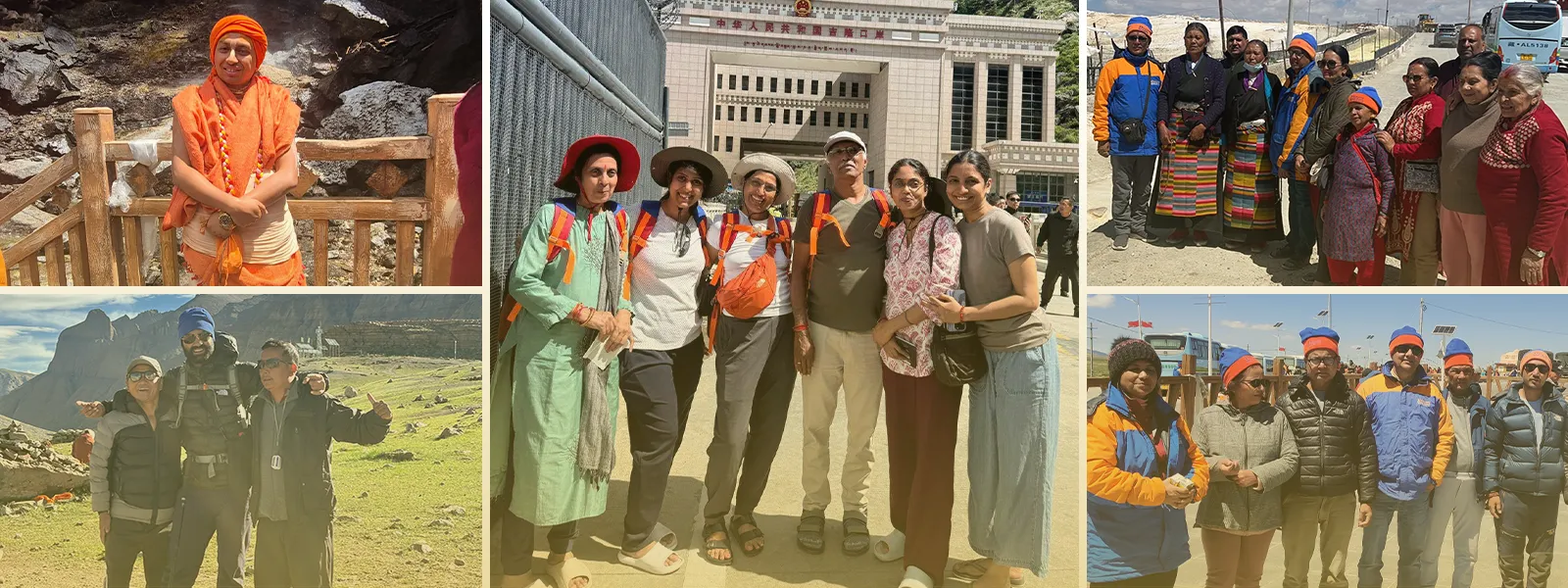
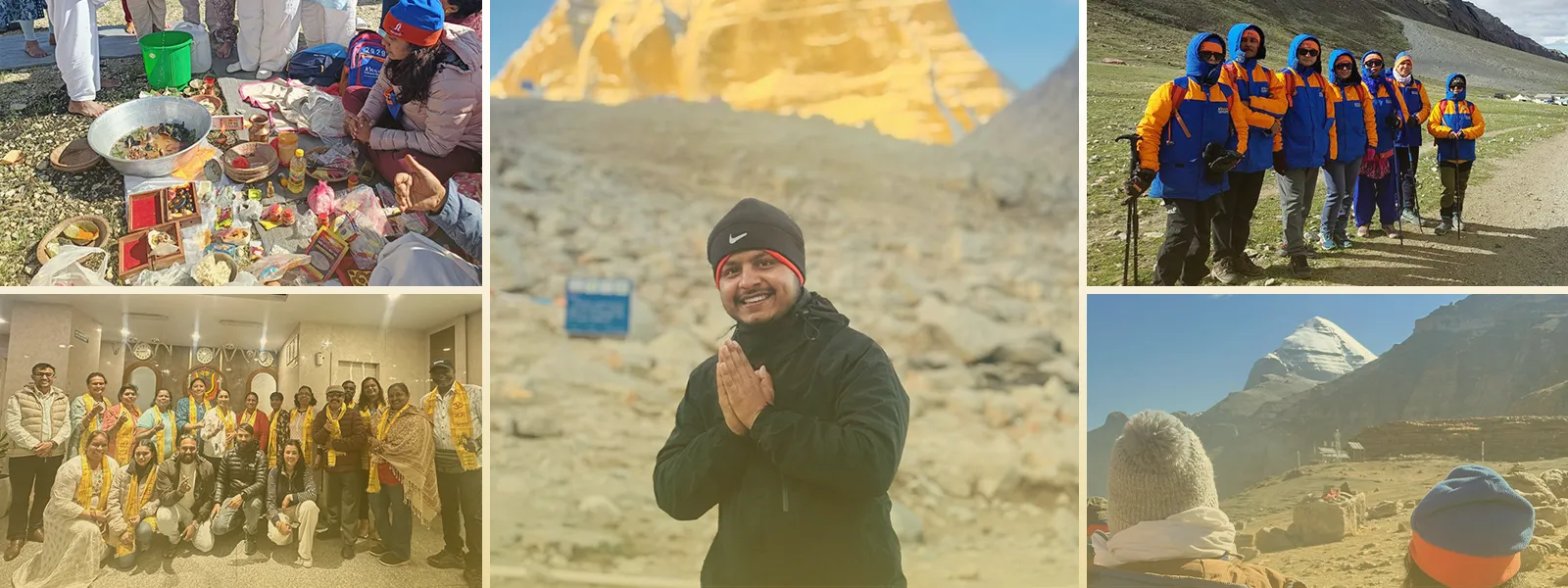
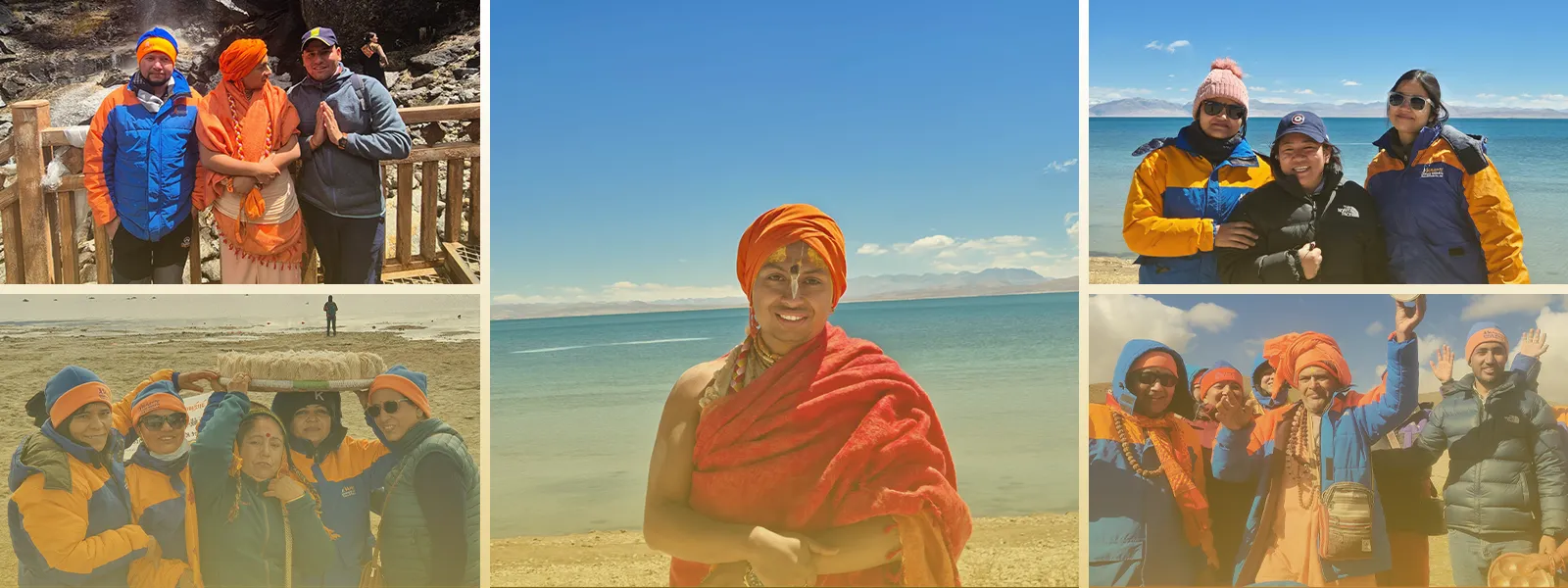
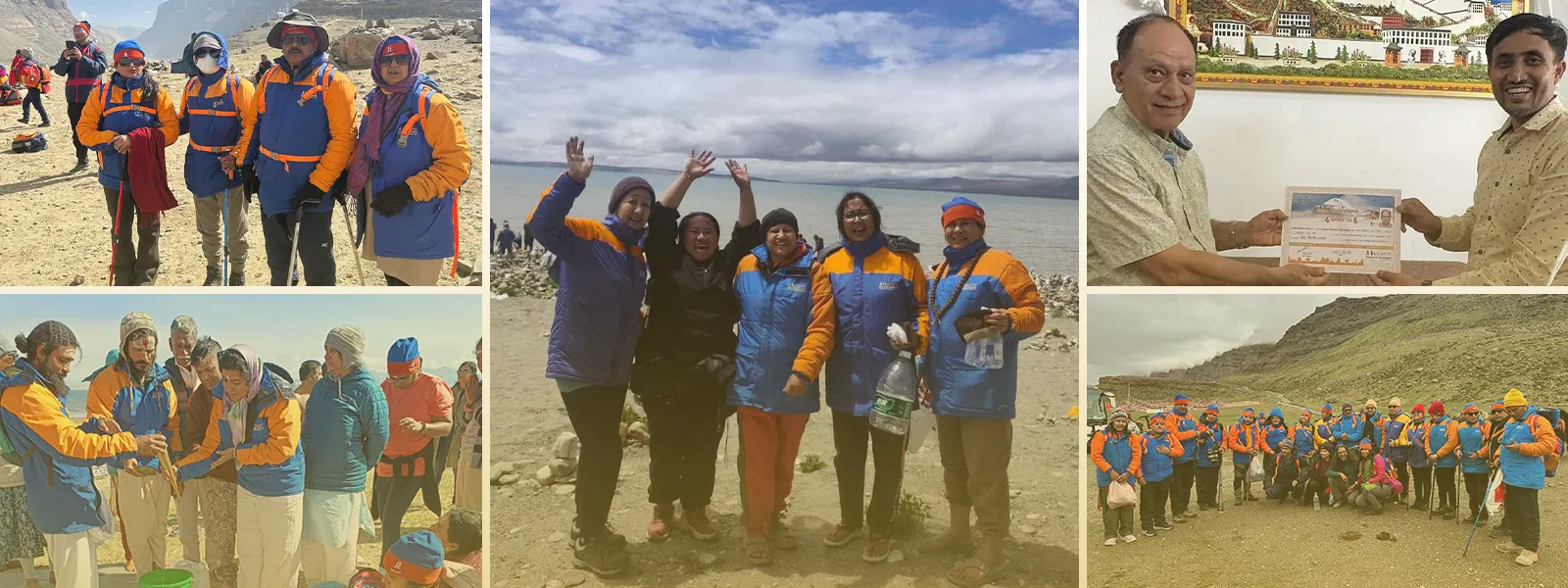
Real moments captured by our travelers during their incredible Himalayan journeys. Witness the divine beauty through their eyes.
Look, I'll be straight, I don't have weeks for a yatra, so this helicopter option let me experience Kailash without the ten-day trek. I landed near Darchen feeling fresh instead of wrecked, and the guide was sharp, knew exactly when to push and when to pause. Watching Mansarovar at golden hour was unreal, and for time-poor pilgrims like me, it was worth every penny.
This trip was fast but not shallow, and I really appreciated that. The helicopter saved days of road travel but the team didn't skip the sacred moments, and the guide shared rituals and gave space for prayer. The altitude hit harder than I expected, sure, but they had oxygen ready and rest scheduled, and I felt safe and cared for throughout. I came back with blessings instead of blisters.
Everything you need to know about your Mount Kailash Mansarovar Yatra journey
This is an 11-day pilgrimage journey that begins in Kathmandu, travels through Nepalgunj, Simikot, Hilsa, and Taklakot, includes Lake Manasarovar and the full Mount Kailash Kora, and returns to Kathmandu.
Yes. This itinerary includes the full Mount Kailash Parikrama, including the trek to Dirapuk, the crossing of Dolma La Pass, the visit to Gauri Kund, and the final stretch back before returning to Taklakot.
Yes. This tour is specially designed for pilgrims who want to complete the sacred Kailash Mansarovar journey with the advantage of helicopter access through the Nepal–Tibet frontier.
This tour reduces some of the long overland travel by using flights and a helicopter connection through Nepalgunj, Simikot, and Hilsa. It is often preferred by travelers who want a shorter and more efficient route to the Kailash region.
Yes. This tour can usually be arranged as a private departure depending on your preferred dates, group size, and service requirements.
We recommend booking at least 30 days in advance so there is enough time for travel documentation, permits, logistics, accommodation, and flight coordination.
Yes. The Simikot sector is widely known for weather-related delays, and helicopter operations to Hilsa can also be affected by changing mountain weather. Travelers should keep some flexibility in their plans.
No. The helicopter sector is typically used between Simikot and Hilsa. After crossing into Tibet, the journey continues by road through Purang, Lake Manasarovar, and Darchen before the trek begins.
It is faster and generally more comfortable on the Nepal side because it avoids several long overland days. However, it does not remove the altitude challenge or the physical demands of the Kailash Kora itself.
Yes. This route moves through remote mountain airstrips and helicopter sectors where weather and visibility can directly affect operations. Because of that, day-to-day movement may sometimes be adjusted to match local flying conditions.
Yes, that is strongly recommended for this route. Because flights and helicopter operations can be affected by mountain weather, keeping extra time after the trip can help avoid stress with fixed onward connections.
Yes. The return from Taklakot via Hilsa, Simikot, and Nepalgunj is highly weather-sensitive. Flight timing and routing can be adjusted depending on mountain weather, air traffic, and local operating conditions.
This route is considered efficient because helicopter access reduces some of the difficult approach travel and helps pilgrims reach the Kailash region faster than many traditional overland journeys.
Foreign travelers need a Tibet Travel Permit, and travel to Mount Kailash region may also involve additional regional permits arranged through the tour operator. Foreign visitors cannot apply for the Tibet permit independently.
Yes, China visa formalities still apply. The Chinese Embassy in Nepal currently uses an online visa application process before passport submission, and processing details should be reconfirmed at the time of booking.
No. Foreign travelers in Tibet must travel on a pre-arranged itinerary through an authorized local operator, and the permit process is tied to that organized tour structure.
No. Current rules require foreign travelers to travel through an authorized local operator, and the Tibet Travel Permit must be processed through that operator rather than by the traveler personally.
Yes. The required visa and Tibet travel formalities must be completed before travel, depending on your nationality and route of entry.
Yes. The itinerary includes assistance with crossing the border at Hilsa and completing the required immigration formalities before proceeding to Taklakot.
It can be suitable for reasonably fit travelers, but the altitude remains serious. Even on the helicopter route, good stamina, slow acclimatization, and honest health assessment are important.
Yes. Anyone with heart, lung, or other significant health concerns should seek medical advice before joining a high-altitude pilgrimage like Kailash Mansarovar. High-altitude travel guidance also recommends gradual ascent and proper acclimatization wherever possible.
This is a challenging high-altitude pilgrimage. Although helicopter access reduces part of the travel time, the journey still includes high-altitude exposure, remote conditions, and the full Mount Kailash Kora.
If you have a pre-existing medical condition, you should consult your doctor before joining. High-altitude travel and strenuous trekking may place extra strain on the body.
Yes, some senior travelers may prefer this route because it reduces some road travel. However, because the tour still includes high altitude and the full Kora, medical advice is strongly recommended before booking.
Accommodation is usually better in towns such as Darchen and Taklakkot, but much more basic during the kora. Guesthouses and simple lodges are standard in the pilgrimage region, especially on trek nights.
During the kora, pilgrims normally stay in monastery guesthouses or simple shared lodges near Dirapuk and Zutulpuk. These are functional rather than comfortable, and travelers should be prepared for basic conditions.
Not everywhere. In town hotels, private bathrooms may be available, but on the kora route, accommodation is usually much simpler and shared facilities are common.
Meals during the journey are generally simple and suitable for high-altitude travel. In larger towns, more options may be available, while food in remote areas is usually more limited.
Yes. In remote regions of the Kailash area, accommodation is simpler and more basic than in Kathmandu or Nepalgunj. Travelers should be prepared for limited facilities in these high-altitude locations.
Yes. Although this is a helicopter-access route, the tour still includes the full Mount Kailash Kora, which involves trekking from Yam Dwar to Dirapuk, from Dirapuk to Zuthulpuk via Dolma La Pass, and the final stretch before returning to Taklakot.
No. This itinerary is designed around the full Mount Kailash Kora. Travelers who do not wish to trek should consider a drive-and-darshan or non-Kora itinerary instead.
This is the hardest day of the pilgrimage. It includes long trekking hours at very high altitude and requires strong determination and proper physical preparation.
Yes. The tour is operated with experienced guides and support staff to assist you throughout the journey in Nepal and Tibet.
After crossing the border and entering Tibet, you will be accompanied by an experienced Tibetan guide who will assist with route coordination, local communication, logistics, and pilgrimage support.
Yes. Our team will assist with airport transfers, hotel coordination, sightseeing, briefing, and final travel preparation in both Kathmandu and Nepalgunj.
Yes. Your guide will help you understand the importance of major pilgrimage sites such as Lake Manasarovar, Rakshas Tal, Chiu Gompa, Yam Dwar, Mount Kailash, Dolma La Pass, and Gauri Kund.
Yes. The guide and support team will coordinate and assist throughout the Kailash Kora.
Yes. Tibetan guides generally communicate in English. Since Tibetan is their native language, their accent and pronunciation may vary, so patience and understanding are appreciated.
Credit cards may not be reliable in remote regions, so cash is the safest and most practical option during this pilgrimage.
You should carry Nepali Rupees for expenses in Nepal and Chinese Yuan for personal expenses in Tibet.
Yes. Tipping guides, drivers, and support staff is customary and appreciated, although it is not mandatory.
Extra expenses may include drinks, snacks, laundry, charging fees, tips, shopping, porter or horse services, and other personal purchases not included in the package.
Yes. It is wise to keep extra cash aside for unexpected expenses, delays, weather-related changes, or additional personal needs during the trip.
Internet access may be available in Kathmandu, Nepalgunj, and some larger towns, but connectivity can be limited or unreliable in remote areas of the Kailash region.
You should pack warm layered clothing, trekking boots, waterproof outerwear, a down jacket, gloves, a hat, sunglasses, sunscreen, personal medication, toiletries, a reusable water bottle, and all important travel documents.
Yes, but network coverage varies depending on the location. Coverage is usually better in towns than in remote trekking areas.
Yes. This is one of the best Kailash Yatra options for pilgrims who want to reduce some of the long road travel while still completing the sacred Kailash Kora.
Yes. Travel insurance is strongly recommended, especially for high-altitude travel, medical emergencies, trip interruption, and emergency evacuation if needed.
Our expert team is here to help you plan your spiritual journey
Get personalized guidance for your journey
Discover more sacred and adventurous journeys in the Himalayas
Experience a rare spiritual journey with the Kailash Mansarovar Aerial Darshan, offering sacred views of Mount Kailash and Lake Mansarovar in comfort and peace.
Embark on a sacred 9-day helicopter journey from Lucknow to Mount Kailash and Lake Manasarovar, experiencing divine parikramas, spiritual rituals, and breathtaking Himalayan landscapes across Nepal and Tibet.
Answer the call of the Himalayas on the Mount Kailash Inner Kora Tour via Kerung, a life-changing pilgrimage filled with sacred moments, stunning scenery, and deeper spiritual connection.
Take part in a soul-stirring pilgrimage with the Kailash Mansarovar Parikrama with Lhasa Cultural Tour, where sacred Mount Kailash, Lake Mansarovar, and the spiritual wonders of Lhasa come together in one remarkable journey.
Begin a spiritually enriching journey with the Kailash Mansarovar Yatra, one of the world’s most sacred pilgrimages, guiding you to the holy Mount Kailash and Lake Mansarovar.
Begin a spiritually transformative journey to Kailash Mansarovar, where the holy Mount Kailash and the serene waters of Lake Mansarovar inspire devotion, peace, and inner awakening.
Set out on a deeply spiritual adventure through the classic Mount Kailash Yatra via Kerung/Kyirong, leading you to some of the most revered sites in the Himalayas.
Experience Mount Kailash Mansarovar through a scenic Lhasa route, combining spiritual sightseeing, holy rituals at Lake Mansarovar, and sacred Kailash darshan in a shorter itinerary ideal for devoted pilgrims.