
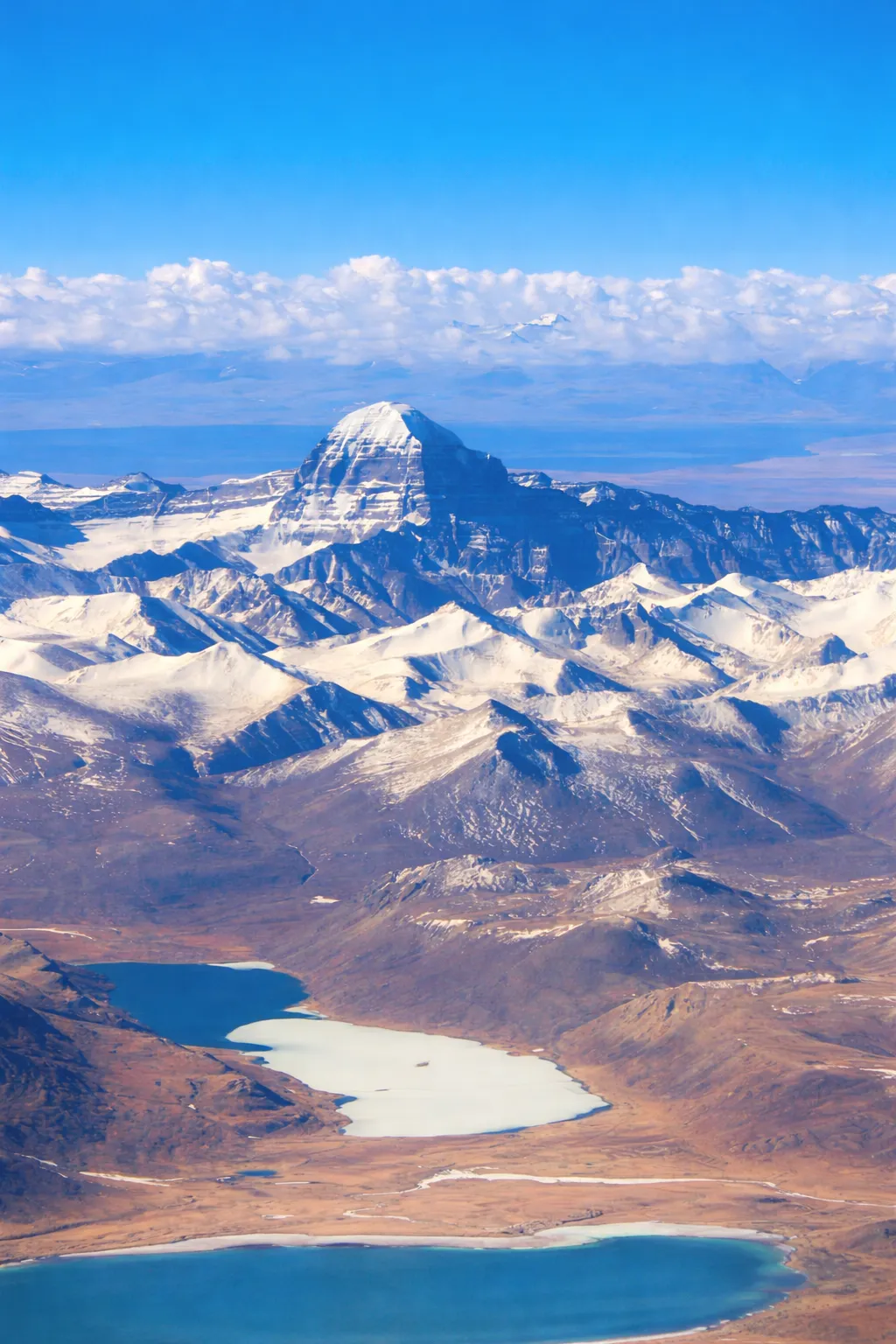
Mount Kailash stands as a profound spiritual beacon in the remote expanses of the Tibetan plateau. For thousands of years, seekers have journeyed to this striking peak to experience its divine presence. While the physical majesty of the mountain commands immediate respect, its deeper resonance lies in the rich tapestry of stories and symbols woven around it. Among the most captivating elements of this lore is the tradition describing the mountain as having four distinct faces.
According to ancient Puranic texts and regional spiritual traditions, Mount Kailash possesses four principal faces aligned perfectly with the cardinal directions. These faces are traditionally associated with precious jewels: crystal, ruby, gold, and lapis lazuli. Understanding these faces opens a gateway to comprehending the profound significance the mountain holds for millions of devotees worldwide.
What are the Four Faces of Mount Kailash?
When ancient texts describe Mount Kailash, they portray a cosmic pillar anchoring the universe. The mountain is traditionally described as having four principal faces aligned exactly to the four cardinal directions of the compass: East, West, North, and South. In traditional Puranic accounts, each face is constructed from a different precious stone or jewel.
The eastern face is associated with clear crystal. The western face is linked to deep red ruby. The northern face is described as being made of brilliant gold. Finally, the southern face is said to be composed of striking lapis lazuli. Official regional tourism materials and historical pilgrimage accounts frequently repeat this four jewel tradition, cementing it into the collective imagination of those who revere the mountain.
To help you visualize this profound symbolic structure, here is a summary table outlining the traditional alignments and their associated spiritual themes:
Face | Direction | Traditional jewel association | Suggested spiritual theme |
|---|---|---|---|
East | East | Crystal | Clarity and awakening |
West | West | Ruby | Devotion and compassion |
North | North | Gold | Power and transcendence |
South | South | Lapis lazuli | Wisdom and depth |
This framework provides a beautiful way to meditate on the mountain. As you read further, you will discover how these symbolic jewels translate into deeper emotional and spiritual meanings for modern pilgrims and ancient sages alike.
Why Mount Kailash is sacred across multiple religions
Mount Kailash is highly unusual because it commands absolute reverence across multiple distinct world religions. It does not belong to just one theology. Instead, it serves as a supreme spiritual center for Hinduism, Tibetan Buddhism, and Jainism.
In Hinduism, the mountain is widely revered as the eternal cosmic abode of Lord Shiva and his consort Goddess Parvati. Devotees believe that Shiva sits in a state of perpetual meditation at the summit, generating the spiritual energy that sustains the entire universe. For a Hindu pilgrim, walking around the base of the mountain represents a direct journey into the presence of the divine.
In Tibetan Buddhism, the peak is known as Kang Rinpoche, which translates to Precious Jewel of Snow. Buddhist tradition often associates the physical mountain with the legendary Mount Meru, the center of the Buddhist cosmology. Furthermore, practitioners believe the mountain is the earthly dwelling of the wrathful deity Chakrasamvara, who represents supreme bliss.
In Jain tradition, the mountain is intimately linked to Ashtapada. Jains believe this is the exact location where the first Tirthankara, Lord Rishabhanatha, achieved spiritual liberation and broke the cycle of rebirth. While scholarly debates exist regarding the exact geographical identification of Ashtapada, millions of Jain devotees accept Mount Kailash as this supreme holy site.
Because the mountain anchors the cosmology of these three massive spiritual traditions, it radiates an atmosphere of universal reverence. The shared devotion transforms the rugged physical landscape into a living temple.

The traditional jewel symbolism of the four faces
The concept of the mountain possessing four distinct jewel faces originates primarily from Puranic style scriptures and ancient cosmologies. In these texts, the universe is often depicted symmetrically, with a central axis mountain dividing the realms of existence.
It is vital to distinguish between traditional source backed symbolism and modern devotional interpretation. The ancient texts clearly link the four cardinal directions to crystal, ruby, gold, and lapis lazuli. These texts describe the physical appearance of the cosmic mountain in the spiritual realm. However, the specific emotional or psychological meanings attached to these jewels today are often interpretive.
Over centuries of pilgrimage, modern devotees and spiritual teachers have layered new meanings onto these ancient descriptions. When a modern pilgrim looks at the eastern face and meditates on new beginnings, they are engaging in a devotional interpretation inspired by the original crystal symbolism.
This beautiful evolution of meaning allows the mountain to speak directly to the personal experiences of contemporary travelers. The four jewel tradition serves as a foundational myth, while the emotional resonance provides a highly personal pathway to spiritual growth. Official Indian district tourism guides embrace this blending of ancient scripture and modern inspiration, presenting the four faces as a holistic spiritual map.
The East Face of Mount Kailash: Crystal and spiritual clarity
The eastern face of Mount Kailash is traditionally associated with pure, unblemished crystal. Because the east is the direction of the rising sun, this face naturally aligns with themes of dawn, renewal, and profound inner awakening.
In devotional interpretation, crystal represents absolute clarity. When light strikes a crystal, it passes through without obstruction, illuminating the environment. Pilgrims who meditate upon the eastern face often focus on clearing their minds of confusion, worldly attachments, and lingering doubts. The crystal face invites the traveler to look inward with complete honesty.
Many devotees associate the east face with new beginnings. Just as the morning sun banishes the darkness of night, the crystal symbolism encourages a fresh start on the spiritual path. For a pilgrim taking their very first steps on the sacred circumambulation, the eastern orientation provides a surge of purifying energy.
You must remember that these are deeply personal, interpretive spiritual readings. They grow from the traditional jewel symbolism but adapt to the heart of the seeker. The east face reminds you that every moment offers a chance to awaken to your true nature, free from the shadows of past mistakes.
The West Face of Mount Kailash: Ruby and devotion
Facing the setting sun, the western face of the mountain is linked in ancient texts to the radiant red ruby. This vibrant, blood red stone carries powerful connotations of warmth, emotional intensity, and absolute surrender to the divine.
In many spiritual traditions, the color red is intimately tied to the heart and the concept of fierce compassion. Devotional interpretations of the western face focus heavily on the power of love. While the crystal of the east represents the clarity of the mind, the ruby of the west represents the fire of the soul.
Pilgrims who feel drawn to the western face often seek to cultivate deeper compassion for all living beings. The ruby symbolism asks the seeker to burn away selfishness and replace it with unconditional love. It represents the warmth of the setting sun, providing comfort and emotional shelter after a long day of spiritual labor.
Furthermore, the ruby face symbolizes surrender. In the glow of the evening, the devotee is encouraged to let go of their ego and trust completely in the divine presence. This fierce, warm devotion is a hallmark of many mystical traditions that view love as the ultimate pathway to enlightenment. The western face calls you to open your heart entirely.
The North Face of Mount Kailash: Gold and spiritual power
For many modern pilgrims, the northern face of Mount Kailash is the most visually iconic and physically imposing. In traditional lore, this face is composed of solid, brilliant gold.
Gold universally represents ultimate value, radiance, and indestructible strength. When applied to the northern face, it symbolizes immense spiritual power and transcendence. The north face is often the most austere and sheer side of the physical mountain, demanding absolute respect from anyone who stands beneath it.
Devotees associate the golden north face with the concept of spiritual ascent and overcoming massive obstacles. Gold does not tarnish or decay; it remains pure regardless of the elements. Similarly, the spiritual strength represented by this face encourages pilgrims to remain steadfast in their vows, even when the physical trekking becomes grueling.
This golden face connects deeply to the mountain acting as a cosmic center or Meru like axis. It stands as an unmoving pillar of divine authority. Pilgrims meditating on the north face often pray for the strength to conquer their inner demons and achieve the highest states of spiritual realization. The gold reminds the seeker that true spiritual wealth is eternal and untouchable by worldly decay.
The South Face of Mount Kailash: Lapis Lazuli and sacred depth
The southern face of the mountain carries the traditional association of lapis lazuli. This deep blue stone, often flecked with gold, has been revered by ancient cultures as a symbol of the night sky, cosmic mystery, and vast oceanic depth.
In devotional interpretation, lapis lazuli represents profound stillness, meditation, and ancient wisdom. If the north face is about active power, the south face is about receptive depth. The color blue invites the mind to settle, to turn inward, and to explore the quiet mysteries of the soul.
Many Hindu devotees find the south face particularly resonant when meditating upon Lord Shiva. Shiva is often depicted with a blue throat, having swallowed the poison of the world to save the universe. The deep blue lapis lazuli connects beautifully to this aspect of his mythology, representing his infinite capacity to absorb suffering and transform it into wisdom.
Visually, the south face is famous for a distinctive vertical marking that runs down its center, which many believe looks like a stairway to heaven. Pilgrims gazing at the lapis lazuli face are called to embrace stillness. It asks you to stop striving and simply rest in the vast, mysterious presence of the divine.
How Hinduism, Buddhism, and Jainism each interpret Kailash differently
To truly appreciate the global significance of Mount Kailash, you must understand how the different spiritual traditions interact with its presence. The mountain is shared, but the specific theological meanings are not identical. The four faces act as a beautiful bridge across traditions, but they do not flatten the distinct beliefs into one single doctrine.
In Hinduism
For Hindu devotees, the mountain is the ultimate physical manifestation of the divine. It is the literal home of Lord Shiva. The journey here is about achieving direct communion with the supreme destroyer of ignorance. The mountain serves as the ultimate pilgrimage destination where a devotee can wash away the sins of a lifetime. The four faces are often seen as reflecting different aspects of Shiva and his divine energy, radiating blessings out to the four corners of the universe.
In Tibetan Buddhism
In Buddhist understanding, the mountain is a natural, massive mandala. A mandala is a sacred geometric structure representing the universe. Tibetan Buddhists view the peak as the residence of Chakrasamvara. Furthermore, the region is deeply associated with the great Buddhist poet and saint Milarepa, who is said to have engaged in a magical contest of strength here against a practitioner of the ancient Bon religion. For Buddhists, walking around the mountain is a highly structured meditative practice designed to accelerate the path to enlightenment.
In Jainism
In Jain tradition, the theological focus is on liberation from the cycle of karma. Jains revere the site as Ashtapada, the place where Lord Rishabhanatha achieved ultimate spiritual freedom. While there is scholarly discussion regarding whether the physical Mount Kailash is the exact historical Ashtapada mentioned in ancient texts, the devotion of modern Jain pilgrims remains absolute. For Jains, the mountain is a monument to perfect asceticism and the triumph of the soul over physical limitations.
Why the Four Faces of Mount Kailash fascinate pilgrims today
The legend of the four jewel faces continues to captivate the imagination of modern travelers. Even in an era of satellite imagery and advanced geology, people actively search for the meanings behind the faces. The directional symbolism provides a highly memorable and poetic way to understand a landscape that defies ordinary description.
Pilgrims often use the four faces to reflect on different stages of their own inner life. You might begin your journey seeking the crystal clarity of the east, rely on the golden strength of the north to push through physical exhaustion, and finally rest in the lapis lazuli stillness of the south. This framework turns a physical trek into an intense psychological and emotional journey.
This content also resonates powerfully across digital platforms. The idea of one single mountain possessing four distinct directions and four symbolic readings appeals to our desire for balance and meaning.
If you feel called to witness these sacred faces yourself, careful planning is essential. You can experience the pilgrimage through the Kailash mansarovar overland tour from kathmandu, which follows a land route through Kerung into Tibet and includes the journey toward Mount Kailash and Lake Mansarovar.
Frequently Asked Questions
What are the four faces of Mount Kailash?
The mountain is traditionally described as having four faces aligned to the cardinal directions. Ancient texts associate the East with crystal, the West with ruby, the North with gold, and the South with lapis lazuli.
Which face of Mount Kailash is golden?
The North face is traditionally associated with gold. In spiritual interpretations, this face represents immense strength, absolute transcendence, and indestructible spiritual power.
What do the four faces symbolize in Hinduism?
In Hinduism, the faces are often seen as reflecting the infinite aspects of Lord Shiva and his cosmic energy radiating outward to sustain and govern the four corners of the universe.
Is Mount Kailash important in Buddhism and Jainism too?
Yes. In Tibetan Buddhism, it is seen as the center of the cosmos and the abode of Chakrasamvara. In Jainism, it is deeply revered as Ashtapada, the site of spiritual liberation for the first Tirthankara.
Is Mount Kailash the same as Ashtapada in Jainism?
Many millions of Jain devotees accept Mount Kailash as Ashtapada, the sacred location where Lord Rishabhanatha achieved liberation, though some historical and scholarly debate exists regarding the exact geographical match.
Can pilgrims see all four faces of Mount Kailash during the Yatra?
Yes. Pilgrims who complete the full circumambulation known as the Kora or Parikrama will walk around the entire base of the mountain, offering them distinct views of all four faces depending on weather conditions.
Final Thoughts
The four faces of Mount Kailash represent more than the mountain’s physical appearance. Their traditional associations with crystal, ruby, gold, and lapis lazuli reflect the deep spiritual significance that has inspired pilgrims for generations.
For those planning to experience this sacred destination, choosing the right route is an important part of the journey. Travelers looking for an alternative to the overland route can consider the Kailash Yatra by Helicopter from Kathmandu, which includes helicopter transfers while still requiring the Kailash Kora trek.
With thoughtful preparation and the right itinerary, pilgrims can focus on the spiritual meaning of Mount Kailash while preparing for a memorable journey.