
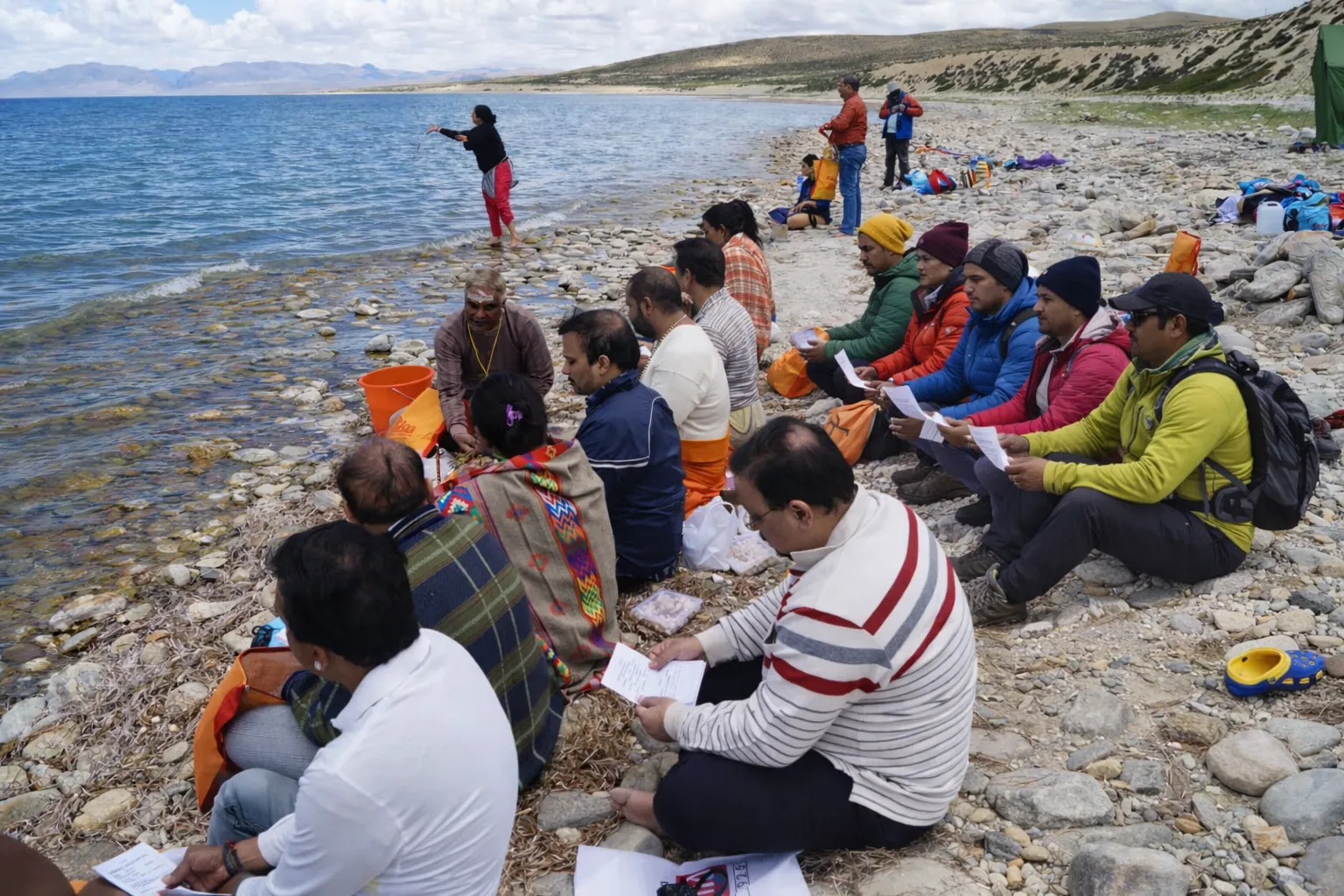
Lake Mansarovar is one of the sacred centers of the Kailash Yatra. Many pilgrims believe its waters symbolize purification and blessing. A full dip is meaningful for some, but symbolic snan is also common. The experience is spiritual first and physical second.
What is Lake Mansarovar and why is it sacred?
Lake Mansarovar, also known as Mapam Yumco in Tibetan, sits at the foot of Mount Kailash in the remote western region of Tibet. It is one of the highest freshwater lakes in the world, resting at an elevation of roughly fifteen thousand feet above sea level (4,590 meters). However, its geographical marvel is only a small part of its global appeal. For centuries, this massive body of water has served as a primary spiritual destination for millions of seekers.
The lake is not merely a scenic stop on a mountain trekking route. It represents the ultimate source of purity, its water being considered amrit, or divine nectar, in countless Hindu scriptures. According to ancient texts and Britannica records, Lake Manasarovar has long been revered as a supreme pilgrimage center. Its pristine blue waters reflect the towering snow peaks of the surrounding Himalayas, creating an atmosphere of absolute tranquility and inviting deep spiritual reflection.
People view this lake as a physical manifestation of divine consciousness. Water represents life, cleansing, and renewal in almost every major world religion. At Lake Mansarovar, this symbolism reaches its absolute peak. The sheer effort required to reach its shores, often involving international travel, long journeys across rugged terrain, and braving extreme weather, elevates the spiritual gravity of the location. Pilgrims believe that the water holds the power to wash away sins accumulated over countless lifetimes. It is a place where the physical world and the divine realm perfectly intersect.
Geographic and Environmental Aspects
The lake has a circumference of nearly 88 kilometers and sits next to its stark companion, Rakshastal, a saltwater lake with its own place in mythology. Watching the sunrise over the calm surface of Mansarovar is often described as one of the deepest experiences of peace and connection to the divine. The presence of migratory birds, the surrounding meadows, and the constant interplay between earth, water, and sky add an almost surreal quality to the pilgrimage experience. Some devotees describe this as stepping into a living mandala.

Why pilgrims travel so far to take a holy dip in Mansarovar
Devotees do not endure days of rugged travel and extreme altitude simply to admire beautiful scenery. They undertake this arduous journey for purification, inner release, and profound renewal. Taking a holy dip in Mansarovar is the emotional and spiritual climax of their pilgrimage.
In Hindu tradition, the water is directly associated with the creator god Brahma. Bathing in these freezing waters is an act of ultimate devotion. Pilgrimage accounts frequently describe this holy bath, or snan, as the single most meaningful act of the entire journey. When a pilgrim steps into the icy lake, the physical shock to the body is mirrored by a massive spiritual awakening in the soul.
The holy dip represents a rebirth. Pilgrims leave their past mistakes, heavy burdens, and spiritual impurities behind in the water. They emerge feeling remarkably light and blessed. This action requires immense faith. The weather is often bitterly cold, and the wind sweeps fiercely across the Tibetan plateau. Yet, devotees walk into the water with tears of joy in their eyes. Many share the belief that, in that moment, lifetimes of negative karma are lifted, and the soul is readied anew for the journey ahead.
This practice is driven entirely by belief. It is a devotional surrender rather than a required physical endurance test. The journey to the lake is a pilgrimage of the heart, and the holy dip serves as the ultimate physical expression of that deep inner faith.
The Pilgrim’s Inner Journey
The act of bathing in Mansarovar, or even simply touching its water, is viewed as aligning one's inner being with the cosmic rhythm. Many pilgrims share stories of feeling a "reset" in their sense of self, a lightness and clarity that lasts for days or even months after the Yatra. Elders whisper that one’s entire destiny can shift with a sincere bath in these sacred waters, and many travelers report a deep sense of peace and release, as if their mental burdens have vanished with the ripples.
Pilgrims also believe that praying by the shore, making offerings, or simply gazing in silent adoration (darshan) brings purification and merit. A pilgrimage is considered incomplete for many unless this act of snan, symbolic or full, is performed.
The spiritual meaning of Lake Mansarovar in Hinduism, Buddhism, and Jainism
The spiritual authority of Lake Manasarovar stretches across multiple major religions. It is a shared sanctuary where different theologies converge on a single body of water.
In Hinduism
Hinduism places Lake Mansarovar at the very center of its spiritual geography. The lake is intimately associated with Brahma the creator and Shiva the destroyer. It is a prominent Hindu pilgrimage center focused entirely on purity and moksha, which is liberation from the cycle of rebirth. Hindus believe that drinking the water or bathing in the lake brings the soul closer to the divine presence of Shiva, who resides on the nearby peaks of Mount Kailash. The lake represents the infinite mind of the creator, making it a wellspring of supreme cosmic consciousness.
Both the Ramayana and the Mahabharata mention the lake in descriptions of sages and ancient rishis who sought solace and enlightenment nearby. Many traditions hold that the four great sacred rivers of South Asia, the Ganges, Sutlej, Brahmaputra, and Indus, originate from the region’s glaciers, making Mansarovar a source of spiritual nourishment and a physical fountain of life.
In Buddhism
Tibetan Buddhists connect the lake to the wider sacred geography of their spiritual landscape. Mount Kailash is heavily associated with Buddhist sacred space, and Manasarovar belongs to that same devotional territory. Buddhists refer to the lake as Mapam Yumco, the "invincible turquoise lake." According to legend, Queen Maya, the mother of Buddha, bathed in Manasarovar before giving birth to Siddhartha (the future Buddha). Pilgrims believe the act of circumambulating the lake or meditating by its shores brings not only merit and purification but also an accelerated path to enlightenment.
The lake plays an essential role during the Saga Dawa festival, the most important date in the Tibetan Buddhist calendar, when thousands gather for ritual baths, prostrations, and mass prayers for world peace and compassion.
In Jainism
The broader Kailash and Manasarovar region carries massive significance in Jainism. This reverence comes through the association with Rishabhanatha, the first spiritual teacher or Tirthankara of the Jain tradition. Jains believe he achieved ultimate spiritual liberation in this region, which they often refer to as Ashtapada. While the physical rituals of bathing may differ from Hindu practices, Jain pilgrims still view the lake and the surrounding mountains as a supreme landscape of asceticism, purity, and ultimate spiritual triumph.
For Jains, a journey to this region serves as a living reflection of the highest possible state of detachment and realization, a pilgrimage not just of physical effort, but of inner stillness and renunciation.
The legends behind Mansarovar: Brahma, Shiva, and the sacred waters
The stories surrounding the lake are as deep as the waters themselves. The most famous legend states that Lake Mansarovar was first formed in the mind of Brahma. According to ancient scriptures, the sons of Brahma needed a place to bathe after performing intense austerities in the Himalayas. Hearing their plea, Brahma created this magnificent lake from his pure thought. The word Mansarovar literally translates to the "lake of the mind."
Because it was born from divine thought, the lake is viewed as a place of absolute mental and spiritual purity. It represents the unclouded, enlightened mind. When pilgrims touch the water, they are touching the pure consciousness of the creator.
The closeness of the lake to Mount Kailash strengthens its association with Shiva in the Hindu imagination. Shiva is the lord of meditation and asceticism. His presence on the mountain casts a divine shadow over the lake below. Many legends suggest that Shiva and his consort Parvati bathe in these waters during the quiet hours of the night. Pilgrims believe that the waters absorb the divine energy of these deities. Every drop of water is saturated with this mythological power.
Additional Legends and Folklore
Other traditions recount how the rishis of old were guided by celestial signs to Mansarovar, and how the deities themselves once gathered by its shores for cosmic rituals to purify both the earth and heavens. In some Jain accounts, the unlocking of the soul's final liberation occurs here, watched by divine beings and showered in a rainfall that perfume the lake’s surface.
For many Buddhists, legends note that the dharma protector deities guard the waters, ensuring their sanctity. Local Tibetan folklore abounds with stories of miraculous healings and visions at the lake, further amplifying the aura of sacredness that envelops its shimmering blue expanse.
What pilgrims do at Lake Mansarovar: snan, jal collection, prayer, and darshan
When pilgrims finally reach the shores of Lake Manasarovar, they engage in several powerful rituals. These actions are deeply personal but follow a beautiful shared tradition.
Lake Mansarovar Rituals
Ritual Name | Action Performed | Spiritual Purpose |
|---|---|---|
Holy Dip | Full immersion in the lake | Washing away past sins and purifying the soul |
Symbolic Snan | Sprinkling water on the head | Receiving blessings when full immersion is not safe |
Jal Collection | Bottling the lake water | Bringing the divine blessing home to share with family |
Shore Prayer | Chanting mantras by the water | Expressing gratitude and connecting with the divine |
Sunrise Darshan | Silent viewing at dawn | Witnessing the presence of the divine in the morning light |
Candle Floating | Placing candles or lamps in the water at dusk | Lighting the inner path, praying for departed ancestors |
Circle Walking | Gentle circumambulation of a section of the shore | Meditative reflection and earning spiritual merit |
A full holy dip is the ultimate goal for many. However, a symbolic snan is equally powerful and widely accepted by spiritual teachers. Pilgrims simply collect a small amount of water in their hands and sprinkle it over their heads. This is especially common among elderly devotees or those sensitive to the cold.
Collecting the holy water, known as jal, is a deeply cherished practice. Pilgrims bring empty brass or copper vessels for this specific purpose, sometimes beautifully decorated with coconut, flowers, or threads from their family shrine. They carry the water back to their homes across the world, using it for household blessings, healing rituals, marriages, newborn ceremonies, and major religious festivals.
Prayer by the shore is a quiet and profound experience. Many devotees sit on the pebbled beaches and chant their personal mantras. Group prayers and readings from sacred texts, such as Shiva Mahimna Stotra or the Ramayana, are common sights at sunrise. Sunrise and sunset offer the most magical times for darshan, which is the act of viewing the sacred site to receive its grace. The changing light on the water creates a visual representation of spiritual awakening. Many pilgrims choose to experience this tranquil darshan either right before or immediately after their grueling trek around Mount Kailash.
Some pilgrims light rows of floating candles or diyas and send them gently across the lake at dusk, watching the flickering lights dance on the water as they pray for departed ancestors, world peace, and personal enlightenment.
Takeaway: Whether your ritual is bold and public or quiet and internal, the lake is seen as amplifying the intent behind every prayer, every offering, and every silent wish.
When is the best time to visit Lake Mansarovar for darshan and holy dip?
Timing your visit correctly is crucial for both safety and spiritual access. The main pilgrimage season typically falls between May and September. During these warmer months, the weather is more forgiving, and the roads leading to the Tibetan plateau are generally clear. The waters of the lake are calmer, the air is more breathable, and access points for ritual include gentle beaches and coves, making the holy dip much safer and more practical.
Britannica notes that the lake freezes solid during the harsh winter months, creating a landscape of glimmering ice but making immersion impossible. Therefore, the devotional season cannot be year round. Pilgrims aiming for the most auspicious times often choose dates that align with the Tibetan Saga Dawa festival in late May or with Purnima (full moon) dates throughout the summer. The full moon nights are especially popular, as the moonlight reflecting off the massive lake provides a breathtaking atmosphere for midnight prayers, group chanting, and silent reflection.
Recommended Darshan Windows
- Saga Dawa full moon (usually May): The most spiritually charged time for both Buddhists and Hindus.
- Summer full moons (June to September): Ideal for devotees seeking both favorable weather and the powerful symbolism of the lunar cycle.
- Late September: Offers clear skies, less crowd volume, and a quieter spiritual experience for meditation or family group trips.
The timing of your visit can influence both the weather you experience and the rituals you wish to observe. The Best Time to Visit Kailash Mansarovar guide provides more details on seasonal conditions and pilgrimage timing.
Can everyone take a dip in Lake Mansarovar? Safety, altitude, and practical reality
Not every pilgrim does a full immersion in the lake, and that is perfectly acceptable. Lake Mansarovar’s altitude, over 4,500 meters, means oxygen is significantly reduced, and the water temperatures are dangerously cold even in the middle of summer.
Your physical condition and safety must always come first. Many pilgrims hope to bathe in the lake, but some choose symbolic sprinkling or shore side prayer because of the cold, the altitude, age, or underlying health issues. Stepping into freezing water at fifteen thousand feet can shock the cardiovascular system or exacerbate pre-existing conditions. It is not uncommon for doctors or group leaders to advise elderly or high-risk pilgrims to only take a symbolic snan.
Spiritual leaders constantly remind devotees that devotional intent matters far more than physical bravado. The divine blessing of the lake is not restricted only to those who fully submerge themselves. Touching the water, drinking a few drops, or simply sitting quietly by the shore all carry the exact same spiritual weight. There is a growing awareness among organized Yatra operators that every person’s journey is unique, and the lake’s grace is available to all sincere seekers, no matter how they participate in the rituals.
Health Guidance for Pilgrims
- Acclimatize slowly and listen to your body’s signals.
- Hydrate well in the days leading up to the lake visit.
- Consider bringing a medical checkup certificate if you are over 60 or have chronic health issues.
- Young children and seniors should especially consider the symbolic ritual approach and avoid full immersion in cold water.
Remember: the spiritual message of the lake is about purity of heart, not extremity of ritual.
How Lake Mansarovar fits into the full Kailash Yatra journey
Lake Mansarovar is an essential pillar of the broader Kailash pilgrimage. The entire journey is a paired sacred experience rather than just a mountain trekking event.
For most travelers, the lake provides their first true darshan of the region. After days of driving across the dusty Tibetan plateau, the sudden appearance of the vast blue waters brings immense emotional relief. Many groups stop at the lake for a ritual bath before they proceed to Darchen, which is the base camp for the mountain circuit.
The lake sits in stark contrast to its neighboring body of water, Rakshastal. While Mansarovar is round, fresh, and associated with light, Rakshastal is crescent shaped, salty, and associated with darkness. This geographical pairing teaches pilgrims about the balance of light and dark in the universe, a recurring motif in Puranic stories.
Pilgrimage Sequence:
- Arrival: The approach to Lake Mansarovar is often marked by group chanting or quiet anticipation. A first sighting of the lake brings many to tears.
- Ritual Bath and Prayers: Most devotees perform their ablutions or prayers at the lake before continuing to Darchen. Group leaders may read from sacred texts or offer group puja.
- Parikrama Preparation: The ritual bath often marks the final cleansing before beginning the parikrama (circumambulation) around Mount Kailash. The cleansing is viewed as a rite of passage, purifying the pilgrim before their greatest challenge.
- Post-Parikrama Return: After completing the circuit, some groups return to Manasarovar for gratitude rituals, thanksgiving prayers, and a final sunrise darshan.
- Comparative Darshan: Many pilgrims visit both Mansarovar and Rakshastal to reflect on the symbolism of purity and darkness, renewal and challenge, that is unique to the region.
For countless devotees, the mountain provides the challenge, but the lake provides the healing. It remains the emotional heart of the entire Yatra.
Additional Spiritual Insights: Mansarovar in Life and Devotion
Ritual Use of Mansarovar Water at Home
Upon return, pilgrims use collected water (jal) for anointing pooja rooms, sanctifying homes, marking new beginnings, and even for use in last rites. Some families preserve a small quantity for years as a constant spiritual anchor, believing it brings continuous blessings across generations.
Mansarovar in Mantras and Meditation
Mantras invoking the spirit of Mansarovar and the grace of Shiva or Brahma are often recited at the lake and at home. “Om Namah Shivaya, Manasarovara Mahatmyam namah” is a common invocation. Meditation practices focus on visualizing the clear waters as a mirror clearing the impurities of the mind.
Lake Mansarovar in Poetry and Literature
Many Indian saints and poets have written about the serenity of Mansarovar. Its mention in ancient texts, folk songs, and modern travel narratives has created a living legacy passed through generations. The silence of early mornings at the lake is a recurring image in these writings, representing not just the stillness of water but the deep quietude of the soul in union with the divine.
Cultural Pilgrimage Festivals
During special auspicious moments, such as Guru Purnima, Saga Dawa, or Maha Shivaratri, pilgrimage groups organize mass prayers, group recitations, and collective offerings on the lake’s banks. The collective devotion multiplies the energy, and many speak of a palpable “field” of peace and joy.
Frequently asked questions about Lake Mansarovar and the holy dip
Why is Lake Mansarovar sacred?
It is revered as a physical manifestation of divine purity. According to Hindu tradition, it was created in the mind of Brahma, and its waters hold the power to wash away sins and grant spiritual liberation. Tibetan Buddhism celebrates its proximity to Kailash, and Jainism honors it through the legend of Rishabhanatha’s liberation.
What is the meaning of a holy dip in Mansarovar?
Taking a dip symbolizes the death of the ego and the cleansing of the soul. It is a devotional act of surrender that purifies the pilgrim of past negative actions and re-centers their inner being.
Is a full dip necessary, or is symbolic snan enough?
A symbolic snan is absolutely enough. Because the water is freezing and the altitude is extreme, sprinkling water over the head, touching it to the forehead, or simply sitting by the shore in prayer carries the exact same spiritual merit as full immersion.
Can elderly pilgrims visit Lake Mansarovar without doing Parikrama?
Yes. Many elderly or less mobile pilgrims travel specifically to the lake for darshan and prayers while the rest of their group completes the strenuous mountain trek. Group leaders often adjust itineraries to accommodate those who wish to remain at the lake.
What do pilgrims do with Mansarovar water after returning home?
Pilgrims store the collected water in their home shrines. They use it to bless their households, purify spaces during festivals, and share the divine grace with family members who could not make the journey. Some even use a few drops in newborn rituals or as a final blessing during funeral rites.
Is Lake Mansarovar the same as Rakshastal?
No. They are two distinct lakes located near each other. Mansarovar is a freshwater lake associated with light and purity, while Rakshastal is a saltwater lake associated with darker mythological forces. Pilgrims often visit both for spiritual reflection.
When is the best month for Mansarovar darshan?
The summer months between May and September offer the best weather, open roads, and thawed waters for performing rituals and enjoying clear views of the surrounding peaks.
Can I visit Lake Mansarovar from Nepal?
Yes. Kathmandu is a major starting point for pilgrims, with both overland and helicopter-assisted options available for the journey. Depending on your preferred route and itinerary, the Kailash Yatra from Nepal can help you plan your pilgrimage to Mount Kailash and Lake Mansarovar.
Are there any times when bathing in Mansarovar is discouraged?
Yes, during particularly rough weather, when the waters are stormy, or during shoulder seasons when the risk of hypothermia is high, guides may advise against immersion. Safety and respect for the lake’s living ecosystem remain paramount.
Do Buddhists and Jains also perform ritual bathing?
Some Buddhists perform symbolic purification at the lake, reciting mantras or walking its banks in meditative circumambulation, while Jain observance often centers more on meditation and prayer rather than aquatic ritual.
Final Thoughts
Lake Mansarovar is a living reminder that spiritual liberation is not about the distance you travel, it's about the sincerity of your heart, the purity of your intentions, and the willingness to seek the divine in both the vast landscape and the quiet center of your soul.
If you are planning to include Lake Mansarovar in your journey, take the time to learn the ritual and ethical guidelines, prepare physically and spiritually, and choose the route that best serves your needs and purpose, whether by overland journey or helicopter-friendly approach. Your sacred dip awaits, in a place where earth, water, sky, and spirit truly meet.