
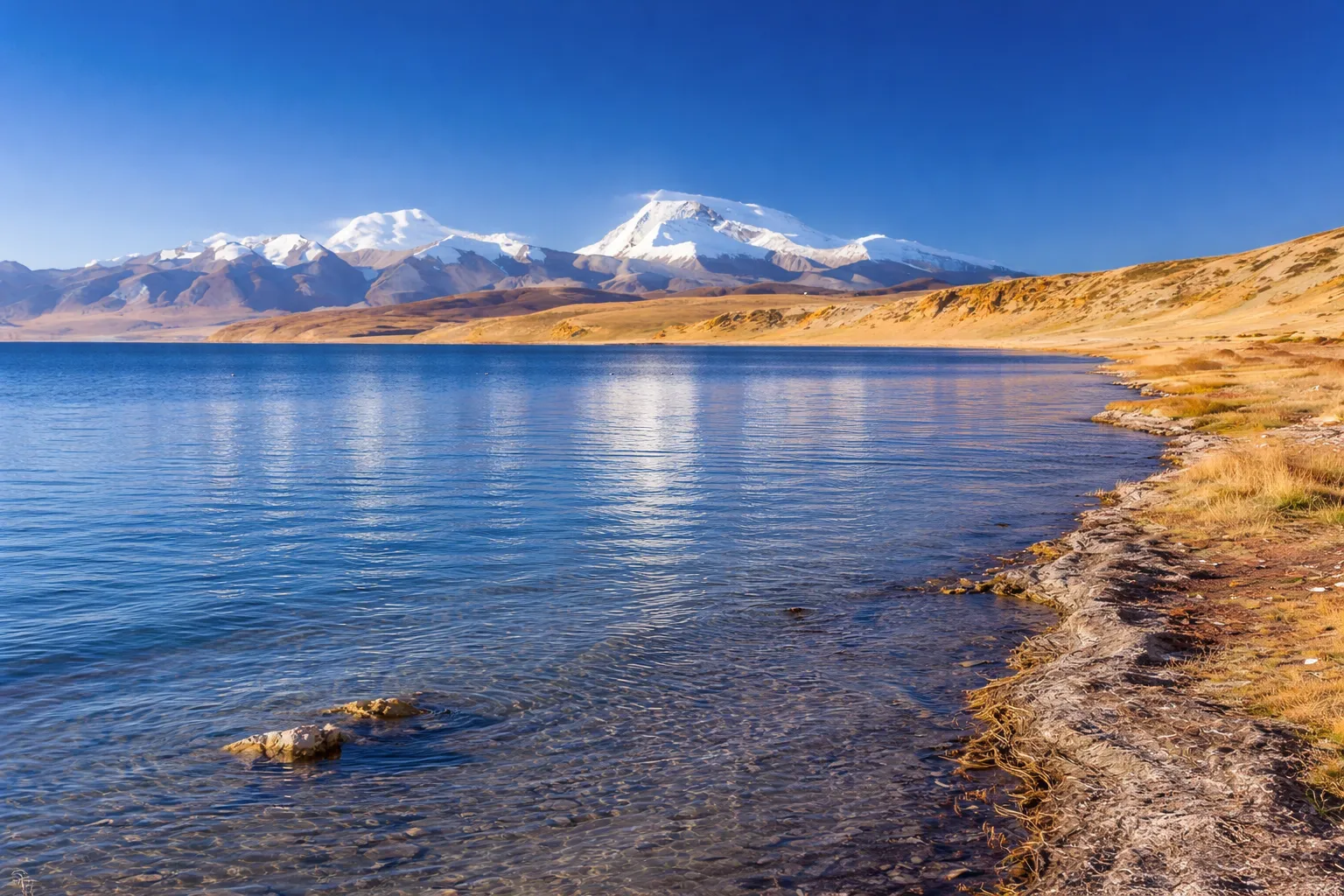
Every twelve years, something shifts at Mount Kailash.
The mountain does not change. The altitude of Dolma La Pass stays at 5,630 metres. The Parikrama route remains 52 kilometres. The cold of a pre-dawn start at Dirapuk is the same cold it has always been. But according to the Tibetan calendar, the Tibetan Buddhist tradition, the Hindu pilgrimage tradition, the Jain faith, and the ancient Bon religion of Tibet, the spiritual energy available at Kailash in a Horse Year is of a fundamentally different quality from every other year in the twelve-year cycle.
2026 is a Horse Year. More than that, it is a Fire Horse Year, which comes not every twelve years but every sixty. The last Fire Horse Year was 1966. The next will be 2086. Anyone who has hoped to visit Kailash in this lifetime is unlikely to have another opportunity of this particular significance.
This guide explains what the Horse Year and the Fire Horse Year actually mean, where these beliefs come from, what the Tibetan and Hindu traditions say about the spiritual merit of the Parikrama in this year, what the Mahakumbh of Kailash is and why 2026 is being compared to it, and what all of this means practically for anyone planning the Yatra in the current season. We have written it as honestly and clearly as we can, because the significance of 2026 deserves to be understood rather than simply marketed.
The Tibetan Calendar and the Twelve-Year Cycle: A Short Explanation
To understand why the Horse Year matters at Kailash, you first need to understand how the Tibetan calendar works, because it is genuinely different from the Gregorian calendar most of us live by.
The Tibetan calendar is a lunisolar system, meaning it is based on both the cycles of the moon and the position of the sun. It has been in continuous use in Tibet for approximately a thousand years. Each year in the Tibetan calendar is named after one of twelve animals in sequence, the same animals that appear in the Chinese zodiac: Mouse, Ox, Tiger, Hare, Dragon, Snake, Horse, Sheep, Monkey, Bird, Dog, and Boar. These twelve animal years repeat in a continuous cycle.
Layered over this twelve-year cycle is a second system of five elements: Wood, Fire, Earth, Iron, and Water. Each element governs two consecutive years before passing to the next, so the full element-animal combination cycle takes sixty years to complete before it repeats. This sixty-year cycle is known in Tibetan as the Rabjung cycle and is the foundational structure of Tibetan astrological calculation.
The current year 2026 is therefore not just a Horse Year in the twelve-year cycle. It is a Fire Horse Year in the sixty-year cycle, specifically what Tibetan astrologers call the Male Fire Horse, or Bing-Wu in the Chinese naming. The Tibetan New Year, Losar, for the Fire Horse Year began on February 18, 2026, and the year runs until February 7, 2027.
The practical implication of this for pilgrims is significant. A Horse Year comes every twelve years. A Fire Horse Year comes every sixty. Anyone who visits Kailash in the 2026 Yatra season is doing so in a year that will not come again in their lifetime.
Why the Horse Year Is the Most Auspicious Time to Circumambulate Kailash
The belief in the heightened spiritual significance of the Kailash Kora during a Horse Year is not a recent marketing invention. It is a tradition that runs through Tibetan Buddhist scripture, Hindu pilgrimage teaching, and the oral traditions of communities that have been sending pilgrims to this mountain for centuries.
The central teaching is this: according to Tibetan Buddhist tradition and Hindu belief, one complete circumambulation of Mount Kailash performed during a Horse Year carries the spiritual merit of thirteen circumambulations performed in an ordinary year. In some traditions, the number given is twelve. The precise figure varies slightly between sources and lineages, but the principle is consistent across all of them: the Horse Year multiplies the fruit of the Parikrama many times over.
This belief has a specific theological grounding. In Tibetan cosmology, Mount Kailash is identified as the abode of Chakrasamvara, a tantric meditational deity representing the highest bliss and the integration of wisdom and compassion. During a Horse Year, this cosmic residence is understood to be at its most active and most accessible. The mountain becomes, in the language of Tibetan Buddhist imagery, a living mandala radiating at peak intensity.
For Hindu pilgrims, the framing is different but the conclusion is the same. Kailash is the eternal home of Lord Shiva. The Horse Year is understood as a time of particular divine generosity, when Shiva's blessings flow more freely to those who complete the Parikrama with sincerity and devotion. The act of walking around the sacred mountain in this year is believed to accelerate the pilgrim's journey toward liberation from the cycle of birth and death.
For Jain pilgrims, Kailash is identified as Ashtapada, the site where the first Tirthankara Rishabhanatha attained liberation. The Horse Year amplifies the power of any act of pilgrimage at sacred sites, and Kailash during a Horse Year is considered one of the most powerful pilgrimage destinations on Earth.
For practitioners of Bon, the ancient indigenous spiritual tradition of Tibet, the Horse Year is connected to the founding myths of the Bon religion itself at Kailash, making it a year of particular return to origins.
What Makes the Fire Horse Year Different: A Once-in-60-Year Event
A Horse Year is special. A Fire Horse Year is in a different category entirely.
In the Tibetan astrological system, the element associated with a year does not merely add a flavour to the animal's energy. It transforms it. The Horse symbolises movement, freedom, spiritual momentum, and the vital life force known as Lungta, or Wind Horse. Lungta is one of the most important concepts in Tibetan spiritual cosmology: it is the energy that carries prayers and blessings across the universe, visualised on Tibetan prayer flags as a galloping horse bearing a wish-fulfilling jewel at the centre. When you see prayer flags strung across a mountain pass or a monastery gate, the Wind Horse at the centre is not decoration. It is the living symbol of spiritual momentum.
Fire, in the Tibetan elemental system, represents purification, transformation, and illumination. It is the element that burns away what is no longer needed and reveals the essential nature of what remains. Fire does not merely change things. It transmutes them.
When these two forces combine in the Fire Horse Year, the result in Tibetan understanding is a year of extraordinary spiritual acceleration. The natural momentum of the Horse is intensified by the purifying force of Fire. Spiritual practices performed during this year are believed to yield fruit far beyond what they would produce in ordinary years. The merit of the Kailash Kora, already multiplied thirteen-fold by the Horse Year, is understood to be amplified further by the Fire element.
The last Fire Horse Year was 1966. In the pilgrimage records of that year, scholars and monasteries documented an unusually large gathering of Tibetan pilgrims at Kailash despite the enormous political difficulties of the time. The devotion and courage required to make that journey in 1966 says something about how deeply this belief in the Fire Horse Year's significance is held by those who live within the tradition.
The next Fire Horse Year will be 2086. Anyone who expects to be alive and physically capable of undertaking the Kailash Yatra in sixty years' time is engaging in optimism of a very specific kind. For most pilgrims, 2026 is the only Fire Horse Year they will ever have the opportunity to use.
The Historical Legends That Connect the Horse Year to Kailash
The significance of the Horse Year at Kailash is not purely astrological. It is grounded in specific historical and mythological events that are remembered and recounted by the Tibetan tradition as having occurred during Horse Years.
The birth of Buddha Shakyamuni
The most foundational of these connections is the belief, held within Tibetan Buddhist tradition, that Siddhartha Gautama, the historical Buddha who later became known as Shakyamuni, was born in a Horse Year. The birth of the Buddha is the beginning of everything that followed: his enlightenment, his teachings, the transmission of the Dharma across Asia, and the entire tradition of Buddhist pilgrimage. For practitioners of Tibetan Buddhism, performing the Kailash Kora in a Horse Year carries the resonance of this most auspicious of beginnings.
Milarepa's victory at Kailash
The second major legend connecting the Horse Year to Kailash is the story of Milarepa, the greatest Tibetan Buddhist poet and yogi, and his spiritual contest with Naro Bonchung, a master of the Bon tradition, at Mount Kailash. According to tradition, the two masters competed to see who could first ascend to the summit of the sacred mountain, with the understanding that whoever reached it first would determine whether the mountain would be claimed for Buddhism or for Bon.
Naro Bonchung rose on his ritual drum and began climbing through the sky as dawn broke. Milarepa appeared to be sleeping. His followers despaired. But as the first rays of sunlight touched the summit of Kailash, Milarepa flew to the top on the rays themselves, arriving before his rival. The victory was absolute. Buddhism was established as the primary tradition at the mountain, while Bon practitioners were permitted to continue their own circumambulation in the counterclockwise direction that remains their tradition today.
This contest is said to have occurred during a Horse Year, which is another reason why the Horse Year is considered especially significant at Kailash for both Buddhist and Bon pilgrims. Walking the Kora in a Horse Year is, in the Tibetan imagination, walking in the footsteps of Milarepa at the most powerful moment of his association with the mountain.
The Bon tradition and the founding of Yungdrung Bon
For followers of the Bon religion, the Horse Year carries its own specific significance at Kailash. The Bon Buddha, Tonpa Shenrab Miwoche, is said to have descended onto the sacred plateau of Kailash in a Horse Year, where he defeated the forces of spiritual obstruction and established the Yungdrung Bon tradition, the teaching that has been carried forward by Bon practitioners ever since. Kailash, in the Bon cosmology, is known as Tise, the central mountain of the world, and the Horse Year is understood as the year in which its sacred role was first fully established.
The Mahakumbh of Kailash: What This Means and Why 2026 Is Being Called a Dev Kumbh
You may have encountered the phrase Mahakumbh of Kailash in discussions of the 2026 Yatra season. It is a phrase that has become widely used among pilgrims and operators, and it is worth understanding what it actually means.
The Mahakumbh Mela, held in Prayagraj in India, is the largest religious gathering in the world. It takes place when the planet Jupiter enters the sign of Taurus and the sun and moon align in Capricorn, a conjunction that occurs approximately every twelve years. The 2025 Prayagraj Mahakumbh was an event of extraordinary scale, drawing hundreds of millions of pilgrims over several weeks. For Hindus, the Kumbh Mela is the most auspicious gathering on Earth.
The parallel being drawn with the Horse Year at Kailash is this: just as the Kumbh Mela occurs when a specific celestial conjunction creates a window of concentrated spiritual power and draws pilgrims from across the world, the Horse Year at Kailash creates a similar window of concentrated merit and draws pilgrims who understand the significance of the timing. Both cycles are driven by the twelve-year orbit of Jupiter around the sun, which is the basis of both the Indian Kumbh calculation and the Tibetan animal cycle.
The term Dev Kumbh, or the Kumbh of the Gods, is sometimes applied specifically to the Fire Horse Year Kailash Yatra, because the sixty-year cycle makes it not merely the twelve-yearly Horse Year Kailash gathering but a gathering of once-in-a-lifetime rarity. If the regular Horse Year Kailash season is analogous to the standard Kumbh Mela, the Fire Horse Year Kailash season is analogous to the Mahakumbh, which is considered even more powerful and draws even larger numbers.
The practical consequence of this framing is that 2026 is expected to be the busiest Kailash Yatra season in living memory. Pilgrims who have been thinking about making the journey for years are likely to choose this year specifically because of its significance. Permit slots, accommodation on the route, and operator capacity will all be under greater pressure than in any recent year. If 2026 is the year you have been waiting for, acting early is not just advisable. It is genuinely necessary.
The Lungta: Wind Horse, Prayer Flags, and the Energy of 2026
One of the most beautiful and distinctive features of the Tibetan landscape at and around Kailash is the presence of prayer flags everywhere you look. Strung across mountain passes, tied to rocks along the Kora route, raised in great columns at Tarboche near Darchen, and hung from the rooftops of Dirapuk and Zutulpuk monasteries, these coloured squares of cloth covered in prayers and symbols are one of the first things that strike pilgrims arriving in the Kailash region for the first time.
At the centre of almost every Tibetan prayer flag is the image of a horse. This horse is the Lungta, the Wind Horse, and it is not merely a decorative element. It is the spiritual mechanism through which the prayers printed on the flag are understood to travel. When the wind moves the flags, the Lungta gallops, and the prayers ride on its back out into the world, bringing benefit to all beings in every direction.
The connection between the Wind Horse and the Horse Year is deeply intentional in Tibetan cosmology. The Horse Year is understood as a year in which the Lungta of every practitioner is at its strongest. The personal life force and spiritual momentum that the Lungta represents is amplified, prayers carry further, and the merit of spiritual actions accumulates faster. This is why Tibetan teachers consistently recommend using a Horse Year for major pilgrimages, important new spiritual commitments, and any practice that you want to carry particular weight.
At Kailash in 2026, this principle converges with the Fire element's purifying intensity and the sacred geography of the mountain itself. The raising of the new Tarboche flagpole during the Saga Dawa festival, which falls in May and June, is one of the most important ritual events of any Kailash pilgrimage season. In a Horse Year, the raising of that pole carries additional significance. The direction in which it stands after raising is read as an omen for the spiritual quality of the year ahead. Pilgrims who are present for this ceremony in 2026 will be witnessing something that has not occurred in this form since 1966.
Saga Dawa 2026: The Holy Month Inside the Horse Year
If the Fire Horse Year is the most auspicious year in sixty years for the Kailash Yatra, Saga Dawa is the most auspicious month within that year. And in 2026, the two overlap in a way that makes the Saga Dawa window particularly special.
Saga Dawa is the fourth month of the Tibetan lunar calendar and is considered the holiest month for Buddhist pilgrims worldwide. It commemorates simultaneously the birth, the enlightenment, and the parinirvana of the Buddha Shakyamuni, making every day of the month charged with spiritual significance. On the full moon day of Saga Dawa, known as Saga Dawa Duchen, the merit of every virtuous act is believed to be multiplied ten-thousandfold according to Tibetan Buddhist teaching.
In 2026, the month of Saga Dawa runs from approximately May 17 to June 16. The full moon day of Saga Dawa Duchen falls on May 31, 2026. This is the single most spiritually charged day of the year in the Tibetan Buddhist calendar, and it falls within the most spiritually charged year of the sixty-year cycle, at the most sacred mountain in the Himalayan tradition.
For pilgrims who time their Kailash Yatra to be at the Parikrama during the Saga Dawa full moon, the convergence is extraordinary. You are walking the Kora on the holiest day of the holiest month of the holiest year in sixty years, at one of the holiest places on Earth. In the Tibetan understanding of spiritual merit, this is not a minor distinction. It is a convergence of auspicious conditions that practitioners and scholars have been waiting for and preparing for since the previous Fire Horse Year.
There is also a visual dimension to Saga Dawa at Kailash that is worth knowing about. The ceremony at Tarboche, where tens of thousands of pilgrims gather to witness the raising of the great prayer flagpole by monks, is one of the most spectacular gatherings that takes place anywhere in Tibet. The prayer flags, the chanting, the collective devotion, and the backdrop of Kailash itself make Tarboche at Saga Dawa a scene that defies easy description. In a Horse Year, the number of pilgrims present is expected to be significantly larger than usual.
What This Means for All Four Pilgrimage Traditions
One of the most remarkable things about the Horse Year significance at Kailash is that it is recognised across all four of the major religious traditions that consider the mountain sacred. This is unusual. Most pilgrimage sites are sacred to one tradition. The convergence of four traditions in a shared understanding of the Horse Year's significance speaks to something in the nature of the place itself that goes beyond any single religious framework.
For Hindu pilgrims
For the hundreds of millions of Hindus who consider Kailash the earthly abode of Lord Shiva, the Horse Year carries the deepest possible devotional significance. Lord Shiva's vehicle is Nandi the bull, but the Horse Year is understood in Hindu pilgrimage tradition as a time when Shiva's divine energy is particularly accessible to those who approach with pure devotion. The Parikrama in a Horse Year is believed to bring the pilgrim into direct proximity with Shiva's grace in a way that is qualitatively different from other years.
For Indian pilgrims particularly, the comparison with the Mahakumbh Mela resonates deeply. The Kumbh is understood as the most powerful convergence of divine energy in the Indian ritual calendar. Calling the Fire Horse Year Kailash Yatra the Mahakumbh of Kailash, or the Dev Kumbh, is not hyperbole in the Indian devotional context. It is a precise statement about the quality of spiritual access available.
For Tibetan Buddhist pilgrims
For Tibetan Buddhist practitioners, the Horse Year at Kailash is understood in terms of merit accumulation and karmic purification. The teaching that one Kora in a Horse Year equals thirteen in an ordinary year is not metaphorical. It is understood as a statement about the way spiritual cause and effect operates when the cosmic conditions are favourable. Completing the Parikrama in the Fire Horse Year, particularly during Saga Dawa, is considered one of the fastest and most powerful means of clearing negative karma and accumulating the merit necessary for spiritual progress available to an ordinary practitioner in this lifetime.
Tibetan Buddhist teachers have been consistently encouraging their students and communities to make the Kailash journey in 2026 if at all possible. Monasteries have been organising group pilgrimages. The Kailash Yatra season of 2026 is expected to see the largest number of Tibetan pilgrims in decades.
For Jain pilgrims
In the Jain tradition, Kailash is Ashtapada, the holy mountain where Rishabhanatha, the first Tirthankara, attained liberation. Physical access to the actual summit of Ashtapada is not possible under current conditions, but the circumambulation of the mountain is an act of deep reverence that connects the practitioner to the tradition of liberation established there. The Horse Year amplifies the power of pilgrimage for Jain practitioners in the same way as for Buddhist and Hindu pilgrims, and 2026 has drawn particular attention from the Jain community internationally.
For Bon practitioners
The Bon tradition holds that Mount Kailash, known to them as Tise, is the soul of the world and the source from which their tradition was first established. The Horse Year connection to the founding of Yungdrung Bon at Kailash gives Bon practitioners a specific and personal reason to be at the mountain in 2026. Many Bon pilgrims perform the Kora counterclockwise, as prescribed in their tradition, and they will be present in significant numbers throughout the 2026 season.
Practical Implications for the 2026 Kailash Yatra Season
Everything above is about the spiritual and calendrical significance of 2026. This section is about what it means practically for anyone planning to go.
Expect the busiest season in decades
The 2026 Kailash Yatra season will be significantly busier than any recent year. Pilgrims who have been waiting, planning, or simply thinking about the journey for years are likely to converge on this season specifically because of the Horse Year. Accommodation at Dirapuk and Zutulpuk on the Kora route is limited. Permit slots are issued in batches by the Tibet Tourism Bureau and do not expand to accommodate demand. Group departure dates fill earlier. The practical consequence of all this is simple: planning that would normally be adequate in a quieter year will not be adequate in 2026.
Permit applications need to be submitted earlier than usual
Tibet Travel Permits take between 20 and 30 working days to process in a normal year. In a high-demand year, processing times can extend. The Alien's Travel Permit and Military Permit, which are arranged in Tibet, add further lead time. For foreign nationals, the Chinese Group Visa processing in Kathmandu adds five to seven working days on top of everything else. For June and July departures in particular, the window for reliable permit processing is already narrowing. If you have not yet contacted an operator about the 2026 season, doing so without delay is the advice we would give to any prospective pilgrim.
The Saga Dawa window is already heavily subscribed
The Saga Dawa full moon on May 31 is the single most sought-after date in the 2026 pilgrimage calendar. Operators who have been in business for many years have not seen demand for a specific Kailash departure window like this before. If the Saga Dawa full moon window is important to you, it is important to act immediately to find out whether it is still possible to arrange.
The Inner Kora is available in a Horse Year
This is a detail that many pilgrims are unaware of. The Inner Kora, the shorter and more demanding circuit that runs closer to the mountain itself, is normally restricted to pilgrims who have completed the Outer Kora thirteen or more times. In a Horse Year, Tibetan tradition holds that one Outer Kora equals thirteen ordinary Koras. This means that a pilgrim who completes the Outer Kora in 2026 has, in the traditional reckoning, fulfilled the eligibility requirement for the Inner Kora. The Inner Kora and Outer Kora can therefore be combined in the 2026 season in a way that is not available in ordinary years. This is a rare and profound opportunity for serious pilgrims.
How to Plan Your 2026 Kailash Yatra: A Practical Guide for This Season
Given everything above, here is what you need to know about planning the Kailash Yatra specifically for the 2026 season.
Choose your route based on your situation
The three main routes from Nepal to Kailash are the overland route via the Kerung border, the helicopter route via Simikot and Hilsa, and the Lhasa cultural route. In the context of the 2026 season, all three routes will be operating, but the Lhasa route provides the best acclimatisation and the richest cultural experience. The helicopter route is the fastest and most accessible for Indian nationals and those with limited time. The overland route remains the most affordable and the most immersive.
For 2026 specifically, the Lhasa route is recommended for foreign nationals and for anyone for whom the Fire Horse Year significance includes visiting the sacred sites of Lhasa as part of the same journey. The Potala Palace and the Jokhang Temple are themselves places of profound spiritual significance, and visiting them in the Fire Horse Year adds a dimension to the journey that the direct overland route cannot offer.
Target the right window within the season
The season runs from approximately May to October. Within that window, the Saga Dawa period from mid-May to mid-June is the most spiritually charged, with the full moon on May 31 as the single highest point. June and September are the best months for weather and permit availability outside the Saga Dawa window. July and August are peak season with the highest demand and the most competitive permit environment.
For 2026, our recommendations by audience are as follows. If you can travel in May or early June, target the Saga Dawa window. If you cannot, June after Saga Dawa and September are both excellent. July and August are viable but require maximum lead time for permits. Any window in the 2026 season, even October, carries the Horse Year significance. The auspiciousness of the year applies to the entire season, not just to the Saga Dawa window.
Contact your operator now
This is not a standard piece of advice dressed up with urgency for commercial purposes. It is an accurate description of the situation in the 2026 season. Permit processing times are fixed by the Tibet Tourism Bureau and cannot be shortened. Accommodation on the Kora route is limited by physical capacity and cannot be expanded. The Saga Dawa full moon window is a single date that cannot be rescheduled. The practical window for arranging a 2026 Kailash Yatra is open now and will close earlier than in any recent year.
Kailash Trip Planner has been organising Kailash Yatra departures for pilgrims from India, Nepal, and international destinations for many years. We are fully prepared for the scale of the 2026 season and are working with a range of departure dates across all three routes. If you are planning to go in 2026, we would be glad to hear from you and help you find the right window and route for your group.
Frequently Asked Questions About the Horse Year and the 2026 Kailash Yatra
What is the Tibetan Horse Year and why does it matter for Kailash?
The Tibetan Horse Year is one of the twelve animal years in the Tibetan calendar cycle, which repeats every twelve years. In Tibetan Buddhist tradition and Hindu pilgrimage belief, the Horse Year is considered the most auspicious time to perform the Kailash Kora. One circumambulation of Kailash in a Horse Year is believed to carry the spiritual merit of thirteen circumambulations in an ordinary year. The 2026 Horse Year is further distinguished by being a Fire Horse Year, a combination that occurs only once every sixty years and is believed to amplify the spiritual power of the Horse Year further still.
What is the Fire Horse Year and when did it last happen?
The Fire Horse Year occurs when the twelve-year Horse cycle coincides with the Fire element in the sixty-year Tibetan astrological cycle. This combination appears once every sixty years. The most recent Fire Horse Year before 2026 was 1966. The next one after 2026 will be 2086. The Tibetan New Year, Losar, for the Fire Horse Year 2026 began on February 18, 2026, marking the start of Tibetan year 2153.
What is the Mahakumbh of Kailash?
The Mahakumbh of Kailash is a term used to describe the Kailash Yatra season during a Horse Year, drawing a comparison with the Mahakumbh Mela held in Prayagraj, India, which is also a twelve-yearly event. Both cycles are governed by the twelve-year orbit of Jupiter. The Fire Horse Year Kailash Yatra is sometimes called the Dev Kumbh because the sixty-year rarity of the Fire Horse Year makes it analogous to the once-in-twelve-years Mahakumbh rather than a standard Kumbh. It is expected to draw a significantly larger number of pilgrims than any recent Kailash season.
When is Saga Dawa 2026 and why is it especially significant this year?
Saga Dawa is the fourth month of the Tibetan lunar calendar, commemorating the birth, enlightenment, and parinirvana of the Buddha Shakyamuni. In 2026, Saga Dawa runs from approximately May 17 to June 16, with the full moon day of Saga Dawa Duchen falling on May 31. The significance of Saga Dawa 2026 is exceptional because it falls within the Fire Horse Year. Pilgrims performing the Kailash Kora on or around the Saga Dawa full moon are doing so at the convergence of the holiest day of the Tibetan lunar calendar and the most auspicious year in sixty years.
Is it true that the Inner Kora is available in the Horse Year even without completing the Outer Kora thirteen times?
According to Tibetan tradition, completing the Outer Kora once in a Horse Year is spiritually equivalent to completing it thirteen times in ordinary years. This means that a pilgrim who completes the Outer Kora in 2026 has, in the traditional reckoning, fulfilled the threshold of thirteen Koras that normally qualifies a pilgrim to attempt the Inner Kora. This rare convergence makes it possible, in principle, to combine both circuits in the 2026 season. Consult your operator about the practical logistics and current conditions for the Inner Kora before committing to this plan.
Will 2026 be more crowded than usual at Kailash and how does this affect planning?
Yes, 2026 is expected to be significantly busier than any recent Kailash Yatra season because of the Horse Year significance. More pilgrims from India, Nepal, Tibet, and international destinations are planning to go specifically this year. This means that permit slots fill earlier, accommodation on the Kora route is more competitive, and popular departure windows such as the Saga Dawa period are heavily subscribed. Anyone planning a 2026 Kailash Yatra is strongly advised to contact their operator at least four to six months before the intended departure date.
I have been planning the Kailash Yatra for years and have not yet gone. Is 2026 the year to do it?
If you have the physical capacity to make the journey and the circumstances of your life allow it, 2026 is an exceptional year to go. The Fire Horse Year comes once every sixty years. The Saga Dawa full moon of May 31 adds a further layer of auspiciousness. The convergence of the Horse Year, the Fire element, and Saga Dawa within a single pilgrimage season is not something that will be available again in this lifetime for almost anyone reading this. The spiritual traditions that surround Kailash, regardless of whether they are your own tradition, agree on this point. If the mountain has been calling to you for years, this is the year to answer.
The Mountain Is Waiting. This Year Is Not Like Other Years.
We have been helping pilgrims reach Kailash for many years. We have seen seasons that were busy and seasons that were quiet. We have never seen a season with the accumulated weight of significance that 2026 carries.
Whether you approach the mountain from the perspective of Hindu devotion, Tibetan Buddhist practice, Jain pilgrimage, Bon tradition, or simply as someone who feels inexplicably drawn to one of the most extraordinary places on Earth, 2026 offers you something that will not come again for sixty years.
We handle every permit, every vehicle, every guesthouse booking, every altitude assessment, and every logistical detail. Your job is simply to decide that this is the year.
Begin your 2026 Kailash Yatra: kailashtripplanner.com