
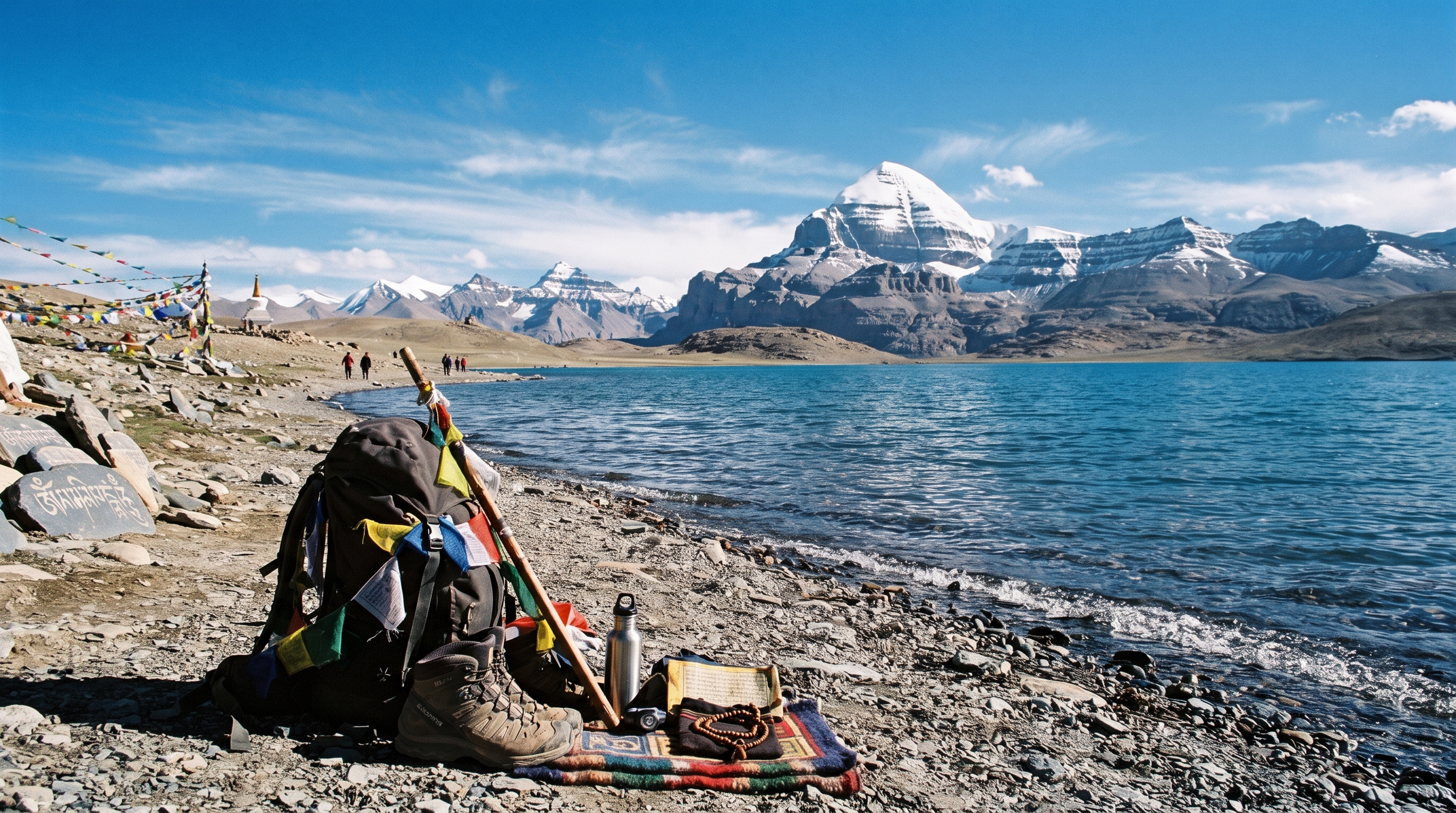
No other journey compares to the truly spiritual pilgrimage to the sacred Mount Kailash and holy Lake Mansarovar. Transporting you deep into the isolated, high-altitude region of the Tibet Autonomous Region , where routes often rise above 4,600 meters in elevation and reach 5,630 meters in the challenging Dolma La Pass, this adventurous travel demands strength of body, spirit and mind. Considering that the facilities in western Tibet are sparse and erratic, having a well-prepared Kailash Mansarovar Yatra Packaging list is by far the most critical thing you can do to protect yourself from any health problems and guarantee a genuinely spiritual journey. To learn more about identifying symptoms early and managing altitude-related health concerns, read our dedicated guide on Altitude Sickness on Kailash Mansarovar Yatra.
Veteran tour guides and pilgrims who have been to this area will tell you that the equipment that you bring with you can literally make or break your trip. Unexpected alpine storms, freezing temperatures at night, and absence of proper blister protection may ruin your pilgrimage and turn it into a hard and tiring activity. This comprehensive, category by category guide gives all information about what to wear during kailash yatra, required medications, weight restrictions, banned products, etc.
How Proper Packing Makes Your Spiritual Journey
The preparation of an overland Kailash Mansarovar Yatra that lasts for 13 days involves paying particular attention to details. Travelling through high altitude zones through Kathmandu, Kyirong, Saga, Lake Mansarovar , and Darchen puts visitors into challenging areas in which the temperature is between 4-20 celcius during the day and about -1 to 2 degree celsius during the night. As one reaches the highest altitude, such as the Dolma La Pass at 5,620 meters, it is important to have proper clothing, medicines, and documents to have a safe, comfortable, and spiritual journey.
When one enrolls in a trip organized by operators like Kailash Trip Planner, one embarks on a 13-day deep exploration of cultural and spiritual destinations. The first step of the tour starts from Kathmandu where you get a traditional welcome with a Rudraksha Mala. After visiting Pashupatinath Temple, Budhanilkanth (Jal Narayan) and Gujeshwori Shakti Pitha, you proceed north towards the Nepal China border at Timure and Syabrubesi.
Saga brings you through the majestic mountains to finally view the beautiful darshan of Lake Mansarovar and Mt. Kailash at Horchu. You then take the holy bath, puja, havan, and meditation at the holy lake of the world and then travel on to Darchen where you will undertake the Kora trekking for three days. On the way, you would visit Yamdwar, Diraphuk, cross Dolma La Pass at 5,620 meters, Gauri Kund, Zuthulphuk before traveling back to Kathmandu through Saga and Kyirong.
Given the fact that you travel through remote regions of high altitude, harsh climate conditions, simple guest house stays, and very few facilities, your packing list becomes the most important thing that ensures survival and comfort. Everything that you pack becomes the difference between your physical and spiritual survival on the Yatra.
The Golden Rule of Himalayan Layering: Essential Clothing and Boots
Since weather conditions in the Tibetan plateau can change rapidly from extreme bright and sunny heat to freezing alpine winds, learning how to dress in layers will be the most effective way to defend yourself from extreme elements. The list of clothing and equipment offered by the Kailash Trip Planner will help you keep your body warm and dry. Some of the necessary items mentioned in our checklist are:
- Windproof or down jacket - 1
- Warm thick pullover or fleece - 1
- Thermal inner wear (top and bottom) - 2 sets
- Full sleeve shirts or T-shirts - 3 to 4
- Warm trousers or trekking pants - 3 to 4
- Raincoat or poncho - 1
- Woollen socks - 4 to 5 pairs
- Warm gloves - 1 pair
- Woollen cap or sun hat - 1
- Scarf, muffler or neck warmer - 1
- Trekking shoes - 1 pair
- Comfortable sandals or floaters - 1 pair
High-Altitude Health: Medical Kits & Medicines You Must Carry
Maintaining health, hydration and acclimation is important while going up to the higher altitudes in the Tibetan plateau where elevations usually surpass 4,500 meters and reach 5,620meters . While tour operators have basic first aid supplies and oxygen cylinders in vehicles , carrying a medical pack becomes very important. Physical fitness and proper health conditioning play an important role in making your journey successful and hassle-free. To build the stamina needed for the rugged terrain, follow the expert routines and exercises detailed in the Ultimate Kailash Yatra Fitness Guide. The pilgrims need to have a medical pouch which basically contains:
- Diamox 250 mg - about 20 tablets per person, only
- after doctor advice
- Personal regular medicines in sufficient quantity
- Pain relief or headache medicine
- Cold, cough and fever medicine
- Stomach upset or diarrhoea medicine
- ORS or electrolyte sachets
- Band-aid, crepe bandage and antiseptic
- Motion sickness medicine
- Basic personal first-aid kit (the company also carries an emergency kit)
In addition to carrying these medicines, follow core high-altitude health guidelines: walk slowly, stay well-hydrated, avoid overexertion, and strictly avoid smoking, alcohol, and heavy greasy meals throughout the Yatra. Inform your guide immediately if you experience persistent dizziness, severe headache, nausea, or unusual breathlessness.
Personal Hygiene & Daily Use Accessories
Maintaining personal hygiene on the remote Tibetan plateau requires careful planning, as running water and modern amenities are sparse. Your daily routine will benefit greatly from bringing these essential items:
Personal Hygiene Accessories
- Toothbrush, toothpaste, soap, shampoo and comb
- Towel or hand towel
- Moisturizer, lip balm and sunscreen (SPF 30+)
- Wet wipes and hand sanitizer
- Toilet paper or tissue rolls
- Dust mask or face mask
- Personal toiletry pouch
Daily Use Accessories
- Day backpack or small rucksack
- Duffle bag or waterproof bag
- Water bottle (1 litre capacity)
- Sunglasses with UV protection
- Torch or headlamp with extra batteries
- Power bank, phone charger and universal adapter
- Money bag or waist pouch
- Zip bags or waterproof covers for documents and
- electronics
- Notebook and pen
Food & Hydration: High-Energy Snacks and Sustenance on the Trail
The sudden change in the elevation of the altitude, can burn down your energy at a very high rate and make you feel drained and exhausted. In such a situation, you need some quick hydration or food that can make you feel boosted. Packing the following items will be beneficial in keeping your energy levels stable across demanding terrains:
- Dry fruits, nuts and energy bars
- Biscuits, chocolates and glucose
- Instant noodles or soup packets
- Electrolyte or ORS sachets
- Personal tea or coffee sachets (optional)
- Hot water bottle useful in cold weather
Spiritual Items: Preparing for sacred Rituals and Kora
The Kailash Mansarovar Yatra is a sacred pilgrimage destination. Carrying spiritual items like rudhraksha mala will add a more spiritual meaning to your journey.
Some of the items you should carry are:
- Rudraksha Mala
- Personal puja items
- Small photo or idol
- Prayer shawl
- Empty bottle to carry holy Mansarovar water
Luggage Strategy: Luggage Weight, Duffle Bag and Day Pack Good Luggage management helps you get hassle-free transit through various checkpoints such as international border crossings, security checkpoints and frequent transfers from one vehicle to another:
Luggage weight: Do not carry heavy luggage; an ideal range for you will be 15-20 kilograms per person to satisfy vehicle and support animal restrictions.
Day backpack or a small rucksack: Useful for carrying your daily needs such as drinking water bottles, rain gears, snack items and personal belongings while walking.
Duffle bag or a waterproof bag: It is used to carry your main clothing and gear items which have to be carried to support trucks or yaks.
Safe document handling: All the original documents such as a passport which must be valid for at least 6 months, colour passport sized photographs (48mm x 34mm for the China Visa Process), travel insurance documents and permit papers must be kept in a safe and waterproof folder.
Complimentary aids: Kailash Trip Planner gives you some complimentary travel aids for your journey, namely a down jacket (returnable), luggage duffle bag, day backpack, warm hat, money bag, and sacred Rudraksha Mala.
Luggage Strategy: Weight Limits, Duffel Bags, and Daypacks
Effective luggage management ensures smooth transitions across international borders, security checkpoints, and frequent vehicle transfers:
Luggage weight limit: Carry only light luggage; a practical target range is about 15 to 20 kg per person to comply with vehicle and support animal limits.
Day backpack or small rucksack: Essential for carrying your immediate daily essentials such as water bottles, rain gear, snacks, and personal items while walking. Duffle bag or waterproof bag: Used for storing your primary clothing and gear, which is loaded onto support trucks or yaks.
Document safety: Keep all original documents including a valid passport with at least 6 months validity, color passport-size photographs (48 mm x 34 mm for the China visa process), travel insurance copies, and permit paperwork in a secure, waterproof folder.
Complimentary accessories: Kailash Trip Planner provides helpful complimentary travel items to support your journey, including a returnable down jacket, luggage duffle bag, day backpack, warm cap, money bag, and a sacred Rudraksha Mala. Staying organized with your luggage ensures that administrative checkpoints at borders like Rasuwa Gadhi and Kyirong proceed without frustrating delays. Always keep your passport, permits, water bottle, and a warm jacket easily accessible in your day bag during travel days.
Strict Rules: Prohibited Items You Cannot Bring to Tibet
Compliance with local laws, regional regulations, and cultural sensitivities is strictly enforced across the Tibet Autonomous Region. Failure to adhere to these rules can lead to immediate confiscation, heavy fines, or severe legal complications:
Political and Religious Materials: Do not carry, display, or photograph any political material, restricted publications, audio/video recordings, or items related to the Dalai Lama. Local authorities and security personnel will take immediate legal action if such items are discovered in your possession.
Photography Regulations: Follow local guidance strictly, as photography rules can be very restrictive around border crossings, military installations, and specific security checkpoints. Respecting local laws and environmental guidelines protects not only your travel group but also preserves the harmonious atmosphere of the pilgrimage. Maintain a positive, patient, and flexible mindset, keeping in mind that mountain travel conditions and regulatory protocols can require sudden adjustments.
Season-by-Season Gear Guide: What to Pack for Your Specific Travel Window
The official travel season for the Kailash Mansarovar Yatra runs from May to September. During this window, average daytime temperatures hover between 4 to 20 degree celcius, while nighttime lows regularly dip from -1 to 2 degree celsius. Regardless of whether you travel during the warmer summer months of July and August or the crisper shoulder months of May and September, high-altitude alpine weather changes unpredictably. Always pack your full set of thermal layers, windproof outerwear, and warm accessories.
Financial preparation is equally vital for your travel window. Always carry adequate USD cash to cover your Nepal visa-on-arrival fee (approx. USD 35) and personal out-of-pocket expenses. Be sure to exchange currency into Chinese Yuan (CNY) while still in Kathmandu before entering Tibet, as other foreign currencies are generally not accepted in remote Tibetan regions. Furthermore, remember that tour payments must be cleared in full before final departure, with booking deposits subject to specific cancellation structures if travel plans change.
Frequently Asked Questions (FAQs)
What clothes to wear for kailash yatra?
Layering is essential due to rapid weather fluctuations on the Tibetan plateau. Pack moisture-wicking thermal innerwear, fleece pullovers or mid-layers, heavy-duty windproof/waterproof down jackets, durable trekking pants, woollen socks, warm gloves, and a warm cap or sun hat.
What medicines to carry for kailash mansarovar?
Carry Diamox (Acetazolamide 250 mg) after consulting your doctor for altitude acclimatization, sufficient personal prescription medicines, pain relievers, cold and cough medication, anti-diarrheal tablets, ORS/electrolyte sachets, antiseptic bandages, and motion sickness pills.
What are the kailash yatra prohibited items?
Political materials, restricted publications, audio or video recordings, and any items, photographs, or books related to the Dalai Lama are strictly banned. Carrying them can lead to immediate confiscation and severe legal penalties under local regulations.
What are the best trekking shoes for kailash parikrama?
Sturdy, waterproof, ankle-supportive hiking boots with deep rubber treads work best for rugged trails and mountain passes. Ensure you break them thoroughly 3 to 4 weeks prior to your trip to prevent blisters.
Can I carry a camera to kailash mansarovar?
Yes, standard digital cameras, action cameras, and smartphones are allowed for capturing the majestic landscape. However, commercial video equipment, drones, and taking photographs near military or security checkpoints are strictly prohibited.
Ready to Begin Your Sacred Journey?
Preparing for the Kailash Mansarovar Yatra is the first step toward a deeply transformative spiritual experience. With expert guidance, structured itineraries, and comprehensive support, Kailash Trip Planner ensures your pilgrimage is safe, comfortable, and spiritually fulfilling from start to finish. Don't leave your journey to chance. Secure your permits, get expert travel assistance, and learn more about our complete checklist requirements to make sure your packing list is fully optimized.